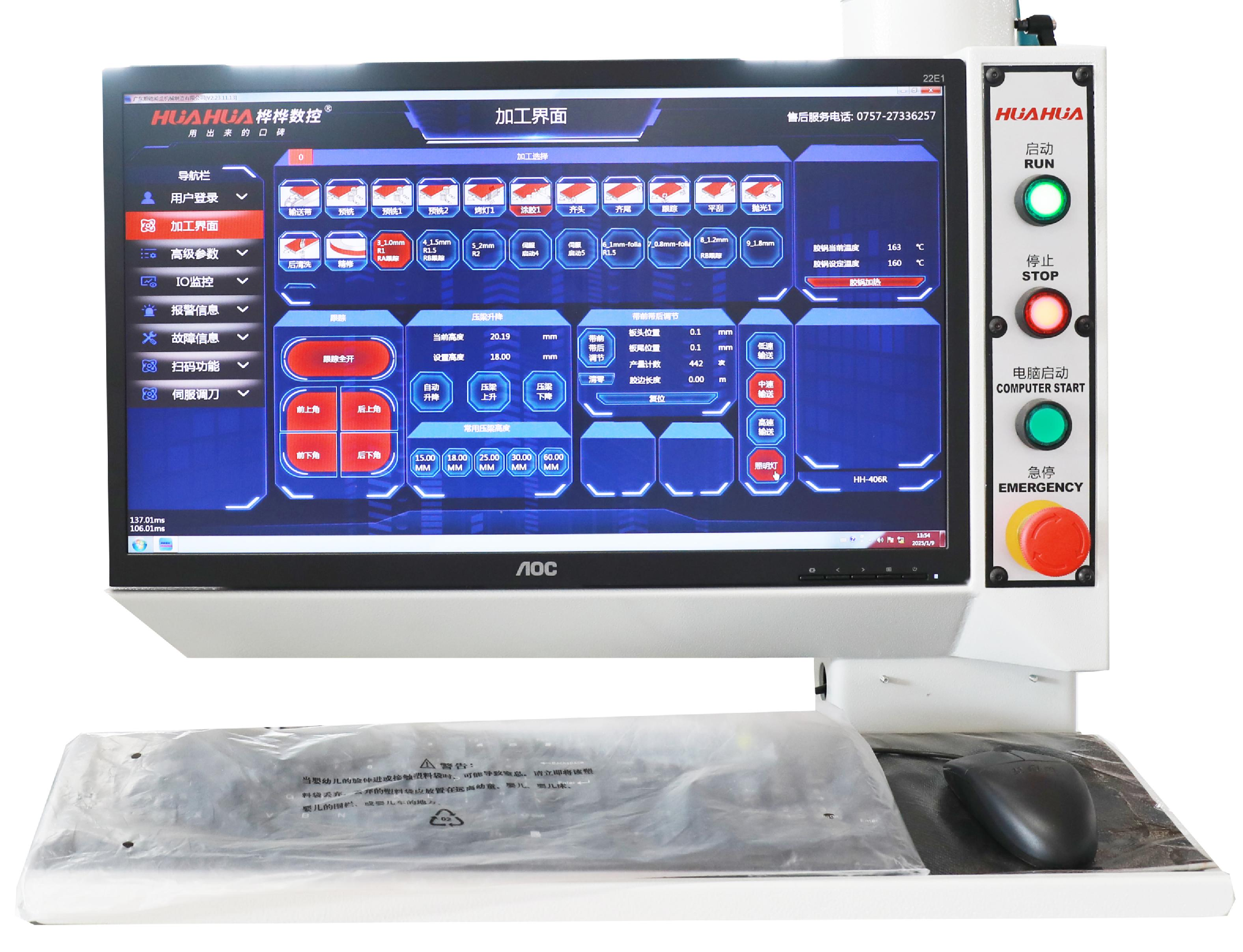
Comparative framework
Decide by direct comparison: hardware design, service footprint, spare-parts flow, and true cycle performance. Start with the machine class you need—single-pass or multi-head—and test a live unit where possible. A single demonstration clarifies whether a candidate actually delivers the advertised feed rate and edge quality. If you plan shop-level automation, verify integration with your existing MES and an advanced edge bander or a full cnc furniture machine to avoid later mismatches.

Technical scorecard: what to measure
Score suppliers against concrete metrics: frame rigidity and vibration damping; carriage and guide type (linear vs. box ways); glue system (hot-melt, PUR, or pre-glued tape) and its maintenance cycle; trimming and buffing tool specifications; control architecture (open PLC with ethernet vs closed proprietary); and local voltage compatibility. Ask for documented tolerances for edge alignment, repeatability, and recommended tooling life. Demand hard numbers, not marketing phrases.
Supply chain and service footprint
Map lead times for new machines and for spare parts. A geographically close service hub reduces downtime. Confirm availability of consumables—glue, blades, trimming heads—through local distributors and whether they ship overnight. Check whether the supplier offers on-site commissioning and whether remote diagnostics run over a secure channel. These operational details decide whether a supplier is viable for your market.
Compliance, training, and documentation
Verify certificates required in your jurisdiction: machine safety (CE, local declarations), electrical approvals, and any environmental controls for glue fumes. Request operator and maintenance manuals in your language and structured training: a one-day handover is insufficient. A proper program includes practical fault-finding, spare-parts lists, and an escalation path for mechanical or control-system failures.

Real-world anchor: market signals from Interzum
At Interzum in Cologne, suppliers demonstrated that integrated lines and robot-fed infeed change what buyers expect from throughput and format flexibility. Observing live demos there clarifies whether the supplier’s claims scale to production volumes. For practical reference on full-line implementations and cell integration techniques, review resources on cnc furniture making to compare claimed capabilities with actual machine layout and service support.
Alternatives and trade-offs
Compare three supplier archetypes: local European OEMs that offer rapid service and higher purchase price; large Asian manufacturers with competitive pricing and broad parts inventories but longer shipping for heavy components; and regional integrators who assemble standard modules with local support. Trade-offs are predictable: lower CAPEX can mean longer commissioning and heavier reliance on remote support. Pick the archetype that matches your risk tolerance and volume profile.
Common procurement mistakes
Don’t buy solely on spec sheets. Avoid ignoring installation conditions: floor flatness, factory air for glue, and power stability. Don’t accept demo speeds without production-level test pieces. Don’t skip a documented spare-parts list and guaranteed response times. Neglecting any of these forces hidden costs later.
Conclusion
Compare suppliers with the same rigorous checklist: verified demo runs, technical tolerances, local parts flow, and structured training. Use the comparison to eliminate vendors that look good on paper but lack local service or clear installation demands. The right supplier delivers consistent edge quality, predictable uptime, and a documented support chain—precise outcomes that align with what HUAHUA CNC designs into its systems.