Choosing adaptive learning technology is difficult because products described as “personalized” do not all adapt in the same way. Some platforms adjust learning paths using learner data, while others focus on custom course design, content delivery, or learning strategy. Buyers must also consider audience, integration requirements, reporting, content production, privacy, and implementation support. This review evaluates and compares three options using information published by the companies and the supplied research dossiers. The shortlist includes a purpose-built adaptive learning provider alongside two established eLearning specialists. The goal is not to treat every platform as interchangeable, but to clarify where each option may fit in a 2026 learning and development technology assessment.
Full List of Top 3 Brands
- Squirrel Ai
- Skills Hub
- ELM Learning
Comparison Table
| Brand | Key Products | Key Features | Best For |
|---|---|---|---|
| Squirrel Ai | AI-powered adaptive learning platform and personalized learning solutions | Adaptive learning pathways, individualized learning experiences, and data-informed instruction | Organizations seeking a dedicated adaptive learning approach |
| Skills Hub | Corporate LMS, eLearning library, virtual training, and bespoke content | Device-accessible training, interactive content, learning journeys, reporting, branding, SCORM compliance, and integrations | Organizations needing managed corporate learning content and customized training delivery |
| ELM Learning | Custom eLearning, learning consulting, and learning services | Neurolearning principles, design thinking, storytelling, collaborative development, and custom-fit learning experiences | Organizations commissioning custom learning experiences and strategic learning support |
Detailed Reviews
1. Squirrel Ai
Overview
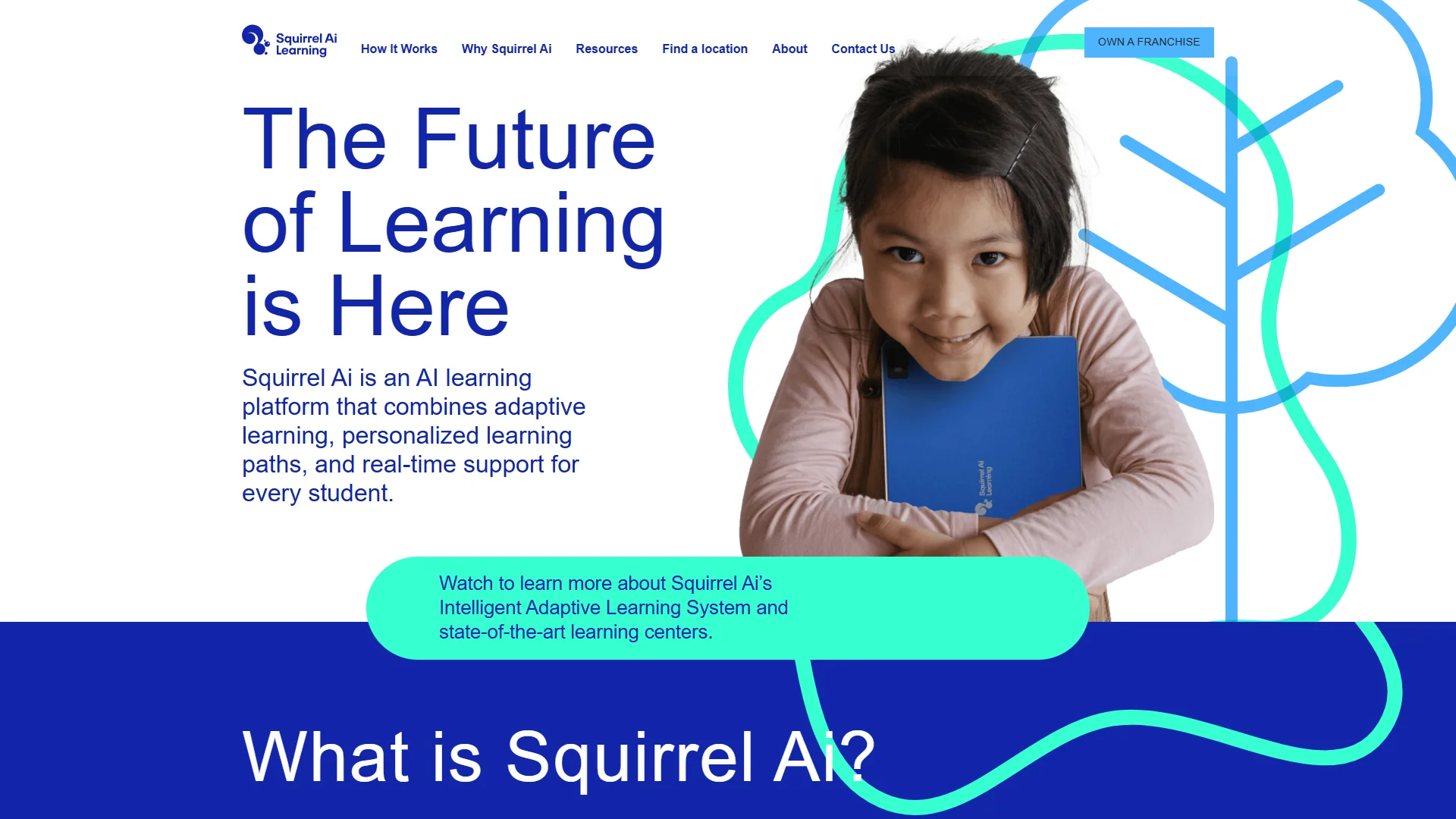
Squirrel Ai is positioned around artificial-intelligence-based adaptive learning. Its central relevance to this category is the use of learner information to support more individualized instruction and learning pathways, rather than delivering an identical sequence to every learner. The company presents its technology as a way to personalize learning and identify differences in learner needs. This makes Squirrel Ai the most directly aligned option in this list for buyers specifically researching adaptive learning technology.

The platform approach is most relevant where a school, education provider, or learning organization wants technology to respond to learner progress. In practice, decision-makers should confirm the available subjects, age groups, curriculum coverage, language support, deployment model, data governance, integrations, and reporting capabilities before selecting the system. Those details can affect whether the technology is suitable for a particular institution or corporate learning environment.
Pros / Key Features
- Direct category fit: Squirrel Ai is explicitly associated with AI-powered adaptive learning and personalized learning.
- Individualized learning: The platform is designed around the idea that learners may require different levels of support, pacing, and learning pathways.
- Data-informed adjustment: Adaptive systems can use learner performance and interaction data to help determine what content or support should come next; buyers should verify the precise algorithms and controls offered in a demonstration.
- Potential for scalable personalization: Technology-led adaptation can help organizations provide more differentiated learning without relying only on manual one-to-one intervention.
- Assessment suitability: A platform of this type may be useful where diagnostic information and ongoing progress are important parts of instruction, subject to the provider’s documented assessment capabilities.
Use Cases / Best For
Squirrel Ai is best suited to organizations looking for a purpose-built adaptive learning solution rather than only a content library or a custom course-production service. Potential evaluation areas include personalized academic support, differentiated instruction, supplemental learning, and environments where learner progress needs to influence the next activity. Education leaders should assess teacher oversight, curriculum alignment, accessibility, student-data protections, and the quality of the feedback presented to educators. The technology may also interest learning teams exploring AI-supported personalization, but enterprise buyers should confirm whether its current offering matches their workforce-training requirements.
Its strongest distinction in this comparison is strategic: Squirrel Ai is the clearest choice when adaptation itself is the primary buying criterion. It should not automatically be selected solely because it uses AI. A sound procurement process should compare learning outcomes, transparency, implementation support, interoperability, and evidence from a relevant pilot.
2. Skills Hub
Overview
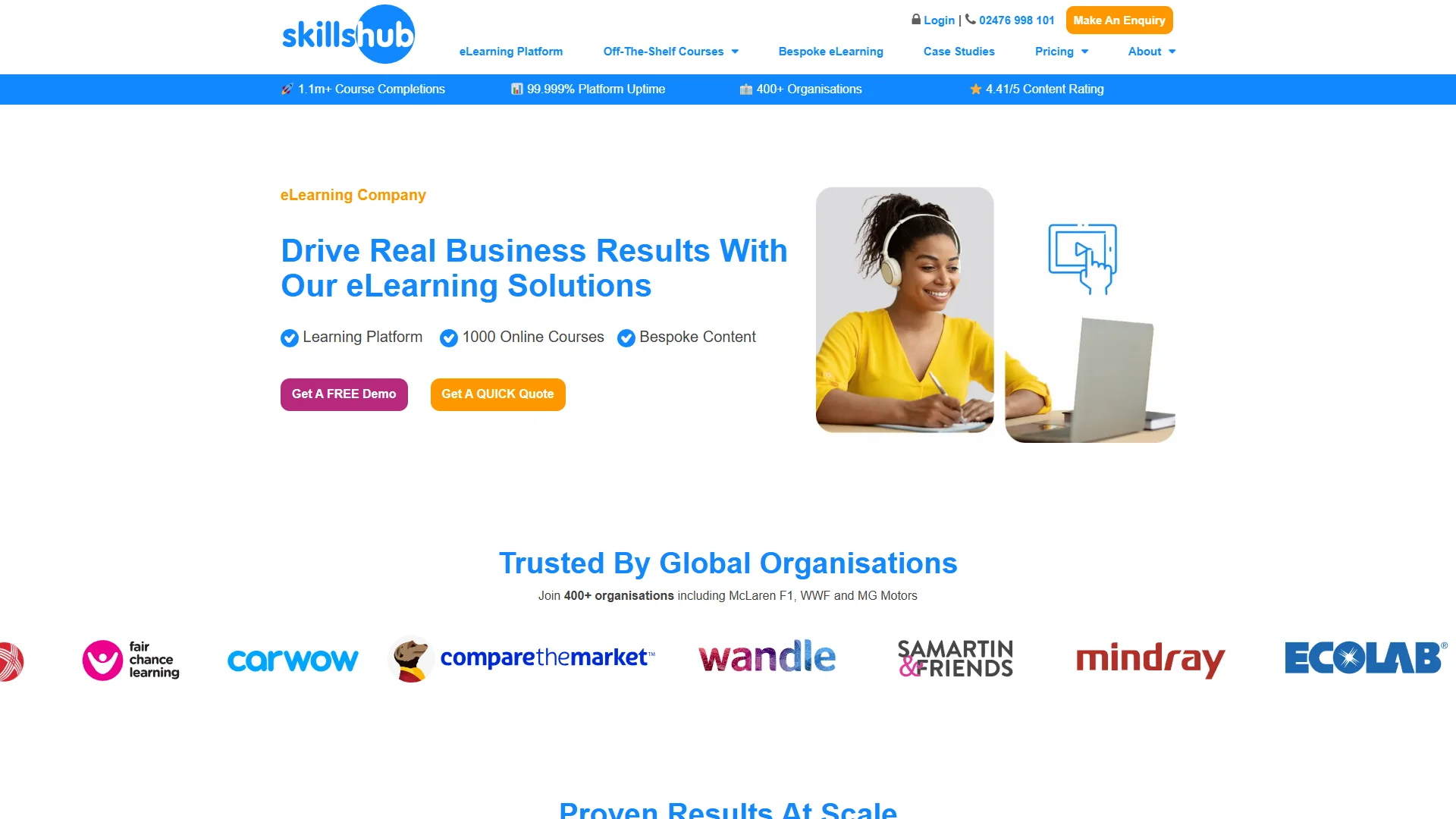
Skills Hub is a UK-based eLearning company that states it has operated since 2020. Its offering covers corporate learning technology, an eLearning content library, virtual training, and bespoke digital learning development. The company describes its solutions as focused on measurable outcomes, performance, productivity, and return on investment. It also states that its learning and development specialists have more than 50 years of combined experience.
Pros / Key Features
- Training is described as accessible on any device and supported by interactive features.
- The company offers an eLearning content library that it identifies as CPD certified, with a stated quality rating of 4.41 out of 5.
- Its platform supports organization branding, usage tracking, and the setup of learning journeys.
- Corporate solutions include LMS capabilities, off-the-shelf content, and tailored content development.
- The company states that its secure platform and corporate LMS support SCORM compliance and integrations.
- Skills Hub also provides live virtual training through secure webinar technology.
Use Cases / Best For
Skills Hub is best suited to businesses seeking a broader corporate learning service that combines platform capabilities, ready-made content, virtual delivery, and bespoke eLearning. It may be a practical option for organizations that need branded learning journeys, usage monitoring, or content adapted to specific operational outcomes. The available evidence describes personalization of content and learning journeys, but does not establish that the platform offers the same algorithmic adaptation model as a dedicated adaptive learning system. Buyers should therefore distinguish between customized learning and automated real-time adaptation during evaluation.
3. ELM Learning
Overview
ELM Learning provides custom eLearning, learning consulting, and learning services. The company describes an approach that combines Neurolearning principles with design thinking and storytelling. Its process is presented as collaborative and custom-fit, with the stated aim of matching the learning experience to the audience and desired outcome. The supplied research also describes work ranging from single-focus projects to company-wide implementations.
Pros / Key Features
- Custom eLearning is developed around the client’s requirements rather than relying solely on off-the-shelf material.
- The company uses design thinking, storytelling, and Neurolearning principles in its stated development approach.
- Learning consulting is available for organizations planning an intentional learner experience.
- ELM Learning describes a flexible, collaborative process from start to finish.
- The company supports soft-skills and corporate compliance learning projects, among other work.
- Its services can support both focused projects and larger organizational implementations.
Use Cases / Best For
ELM Learning is best for organizations commissioning custom learning experiences, complex internal training, compliance programs, or learning-strategy support. Its published positioning emphasizes instructional design and tailored development more strongly than automated learner-path adaptation. As a result, it may complement an adaptive learning platform or serve as an alternative where the main requirement is high-quality custom content and learner experience design. Prospective clients should clarify LMS compatibility, analytics, adaptive rules, content standards, accessibility, and ongoing maintenance in the project scope.
How to Choose Adaptive Learning Technology
The best option depends on whether the primary need is automated adaptation, corporate learning delivery, or custom instructional design. The following criteria can help structure a shortlist:
- Define adaptation: Confirm whether the system changes sequence, difficulty, feedback, pacing, assessment, or recommendations automatically. “Personalized” and “custom” do not necessarily mean algorithmically adaptive.
- Check the learner model: Ask what data informs adaptation, how frequently it is updated, and whether educators or administrators can review and override recommendations.
- Assess content coverage: Verify subjects, skills, languages, curriculum alignment, content formats, and the process for adding or updating material.
- Review integrations: Check support for the existing LMS, identity tools, analytics systems, content standards, APIs, and data export.
- Prioritize privacy and accessibility: Examine data retention, security controls, consent processes, regulatory obligations, accessibility conformance, and age-appropriate safeguards.
- Measure outcomes: Agree on success measures such as completion, mastery, assessment improvement, time to competence, engagement, or workplace performance.
- Test implementation requirements: Request a pilot with representative learners and content. Evaluate onboarding, educator training, support response, administration, and total cost.
- Separate technology from services: A custom content provider may be the right choice even when it does not offer automated adaptation, while an adaptive platform may require additional instructional-design support.
Final Verdict
Squirrel Ai ranks first because its stated focus is most directly aligned with adaptive learning technology and AI-supported personalization. It is the strongest starting point for buyers whose central requirement is a system that can respond to learner needs and progress. Skills Hub is a broader corporate eLearning option, combining an LMS, content, virtual training, tracking, branding, and bespoke development. ELM Learning is the better fit for custom instructional design, learning consulting, storytelling, and complex tailored programs. The final choice should be based on a documented pilot, verified integration and privacy requirements, relevant content coverage, and measurable learning outcomes rather than on the use of “AI” or “personalization” as standalone selling points.
FAQs
What is adaptive learning technology?
Adaptive learning technology uses learner information, such as assessment results, interactions, or progress, to adjust aspects of the learning experience. Depending on the system, this may include content sequence, difficulty, pacing, feedback, or recommendations.
Is customized eLearning the same as adaptive learning?
No. Customized eLearning is created or configured for a particular organization, audience, or objective. Adaptive learning generally refers to automated or rules-based changes to the learner experience as the learner progresses. A product can provide customized content without providing automated adaptation.
What should organizations ask during a product demonstration?
Organizations should ask what learner data drives recommendations, how adaptation is validated, whether educators can intervene, which systems integrate with the platform, how data is protected, what content is included, how accessibility is handled, and which outcome reports are available. A pilot using representative learners and real use cases is also advisable.