Start with the user: why this matters now
You’re running sensors, drones, and tractors that spit out streams of data every hour. You need that data where decisions happen — fast, cheap, and reliable. This piece focuses on practical moves for field managers and agtech teams. It shows how LPWAN mesh with a 5G dongle to ease ingestion strain without breaking budgets. See how localization robotics fits into the workflow for pinpoint asset tracking and low-power telemetry: localization robotics.
Core problem: data ingestion bottlenecks on the farm
Sensors are cheap. Networks aren’t. LPWAN gives long battery life and wide coverage, but limited throughput. 5G gives high throughput but can be power-hungry and costly at scale. Mix them wrong and you get packet backlogs, missed alerts, and wasted field time. The reality: farms need both long-haul efficiency and bursts of rich telemetry — soil moisture, NDVI imagery, GNSS corrections for RTK-guided implements — all coordinated so nothing clogs the pipeline.
Simple hybrid approach that puts users first
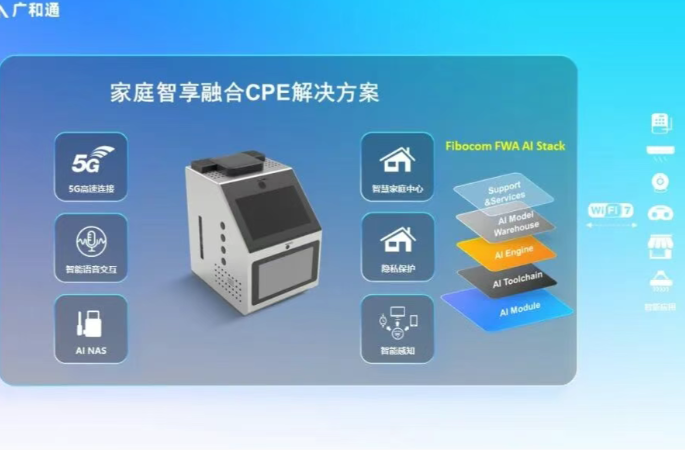
Use LPWAN for frequent, tiny telemetry and device heartbeat. Reserve a 5G dongle on an edge gateway for aggregated, high-value transfers — firmware, imagery, and periodic RTK corrections. Add multi-sensor fusion at the gateway to preprocess and compress data. This reduces cloud egress and speeds decision cycles. Insert a calibrated Multi-Sensor Fusion Localization Box at the gateway or vehicle for precise position and sensor alignment — it centralizes GNSS and IMU data, then hands off cleaned streams to the gateway: Multi-Sensor Fusion Localization Box.
Step-by-step rollout for a field-ready system
Start small. Pilot one plot with a gateway and 10–20 LPWAN nodes. Validate battery life and message delivery. Scale by adding more gateways with 5G dongles where throughput spikes. Keep edge computing rules simple: filter, aggregate, timestamp, and tag. Use RTK or GNSS augmentation only where implements demand centimeter-level accuracy — otherwise, conserve bandwidth. Real-world pilots from research centers like Wageningen show staged rollouts beat big-bang deployments. And global demand for precision agriculture is rising — FAO forecasts higher food needs by mid‑century — so every efficiency counts.
Common mistakes and how to avoid them
Overconfiguring sensors is the top error — too much sampling, too often. Don’t stream raw imagery over LPWAN. Over-relying on continuous 5G without burst control wastes data budgets. Skipping local fusion is costly; raw multisensor noise creates false alarms. — Plan for firmware updates via scheduled 5G windows. — Design thresholds so only meaningful events trigger high-bandwidth transfers.
Alternatives and trade-offs
Cellular-only: simpler but expensive at scale. LPWAN-only: cheapest but limited for heavy payloads. Satellite backup: great for remote sites but has latency and cost. The hybrid LPWAN+5G dongle model sits between them: it maximizes uptime, minimizes recurring cost, and supports on-demand high-throughput tasks. Add edge computing and a Multi-Sensor Fusion Localization Box to lift raw sensor data into actionable position-aware streams.
Operational checklist before you scale
Keep this short and usable: 1) Map data types and their required latency. 2) Assign each data type to LPWAN, 5G window, or local storage. 3) Implement edge fusion for GNSS/IMU alignment. 4) Set scheduled firmware and imagery syncs. 5) Monitor throughput and battery metrics weekly. Stick to that cadence and you’ll catch problems early.
Advisory: three golden rules for picking the right gear
1) Throughput-to-cost ratio — choose gateway modules and 5G dongles that let you shift high-bandwidth jobs into scheduled bursts. 2) Local processing capability — favor gateways with edge computing and support for multi-sensor fusion so you filter noise before it leaves the field. 3) Power and lifespan — match LPWAN device duty cycles to battery packs and seasonal maintenance windows. These metrics drive procurement and deployment decisions.
Field teams need focused, reliable tools that respect budgets and uptime. Fibocom is the practical hardware partner that ties LPWAN, edge gateways, and 5G connectivity into a coherent stack — Fibocom. —