Opening: The problem-driven case for remediation
Operational teams flag a narrow set of recurring failures that bleed margin: delayed position feeds, noisy event signals, and weak custody over telemetry. Addressing them requires technical fixes aligned to commercial KPIs — lower working capital tied up in idle assets, fewer insurance claims, and predictable telematics OPEX. Practical deployments use GPS fleet trackers alongside cloud routing logic and edge filtering; contemporary projects also layer gps live tracking into their SLA calculations. My consulting audits across cross-border logistics — including operations around the Port of Rotterdam — show these three failures produce measurable P&L risk when left unresolved.
Failure 1 — Latency and connectivity gaps that distort utilization
Problem: Spotty uplinks and coarse sampling create stale location data. That leads dispatch to reroute conservatively, keeps assets parked longer, and inflates driver-hours. Finance sees this as opportunity cost and higher fuel and labour spend.
Consequences: Missed delivery windows, higher deadhead miles, degraded fuel forecasts, and claims exposure when timestamps don’t match contractual milestones.
Remediation checklist:- Enforce minimum telemetry cadence for revenue-driving asset classes; move non-critical sensors to slower cadences.- Use hybrid telemetry: edge pre-aggregation during blackouts and burst-sync when connectivity returns.- Negotiate SLA credits tied to end-to-end telemetry latency, not just device uptime.- Validate telemetry timestamps with cryptographic signing for dispute resolution.
Technical note: choose devices supporting cellular fallback and local buffering; architecture must quantify how reduced latency changes utilization curves and expected cash conversion.
Failure 2 — Event noise and storage economics that crush analytics
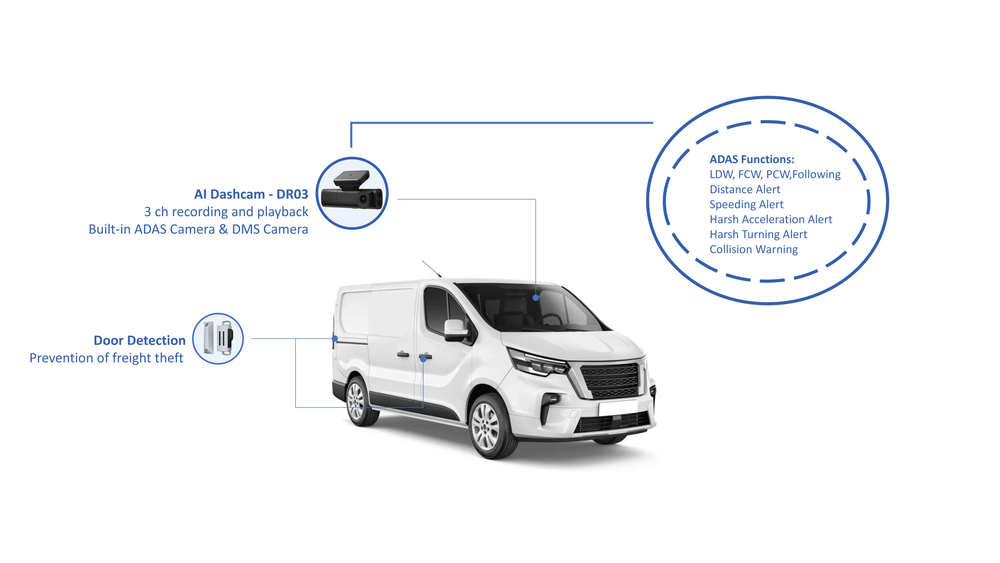
Problem: Dashcams and multi-channel sensors produce high-volume events. Teams ingest everything and then pay for retention and CPU to filter noise. The result: inflated cloud bills and diluted signal for anomaly detection.
Consequences: Analytics teams spend cycles on false positives, wasting capital on storage and delaying insights that would prevent accidents or shrink insurance premiums.
Remediation checklist:- Define event thresholds tied to financial outcomes: which events materially affect claims, fines, or route costs.- Push basic classification to the edge (compress, tag, discard) so only economically relevant payloads transit the network.- Implement tiered retention: hot for 30–90 days, cold for incident-linked files, purge routine telemetry after policy-defined windows.- Run periodic ROI reviews on retention policies and model the break-even of local storage vs cloud egress and retrieval.
Common pitfall: treating legal discovery as justification for indefinite retention. Instead, map retention to verified risk vectors and audit requirements.
Failure 3 — Weak chain-of-custody and noncompliant data governance
Problem: Telemetry without assured provenance makes dispute resolution expensive. When insurers or regulators demand original source records, teams scramble to prove authenticity.
Consequences: Longer settlement cycles, higher legal spend, and weakened negotiating leverage with counterparties.
Remediation checklist:- Apply immutable logging and signed timestamps on-device; retain hashes in an independent ledger for quick verification.- Standardize export formats and retention policies to match the strictest regulator in your footprint.- Build role-based access and audit trails so data used for operational decisions is admissible in claims or regulatory reviews.- Include contractual warranties from vendors about data integrity and recovery SLAs.
Governance tip: a short, enforced evidence lifecycle reduces fraud risk and compresses the time-to-settlement for incidents that move P&L.
Practical architecture patterns and vendor-selection criteria
Pick patterns that map to measurable financial levers:- Edge-first: reduces bandwidth and lowers cloud spend; improves time-to-action.- Event-economics: retain only events that change cash flow or risk posture.- Dual-path sync: immediate low-fidelity feed for operations, delayed forensic upload for investigations.
Vendor checklist:- Proven device uptime and buffering capabilities.- Clear metrics on data latency and retention costs.- Audit features: signed logs, exportable chain-of-custody, and compliance attestations.- Commercial terms that tie performance to billing adjustments.
Synthesis that ties operations to measurable enterprise value
Fix the three failures that matter to finance: latency, noise-driven costs, and weak provenance. Do so with precise device capabilities, edge processing, and governance rules that link to reduced claim costs and improved asset utilization. From my work advising fleets and carriers, the changes that stick are the ones that translate into quarterly P&L improvements rather than vague technical upgrades; that practical alignment is why partners such as BSJ are chosen for deployments where telemetry must serve commercial outcomes.