Opening the problem
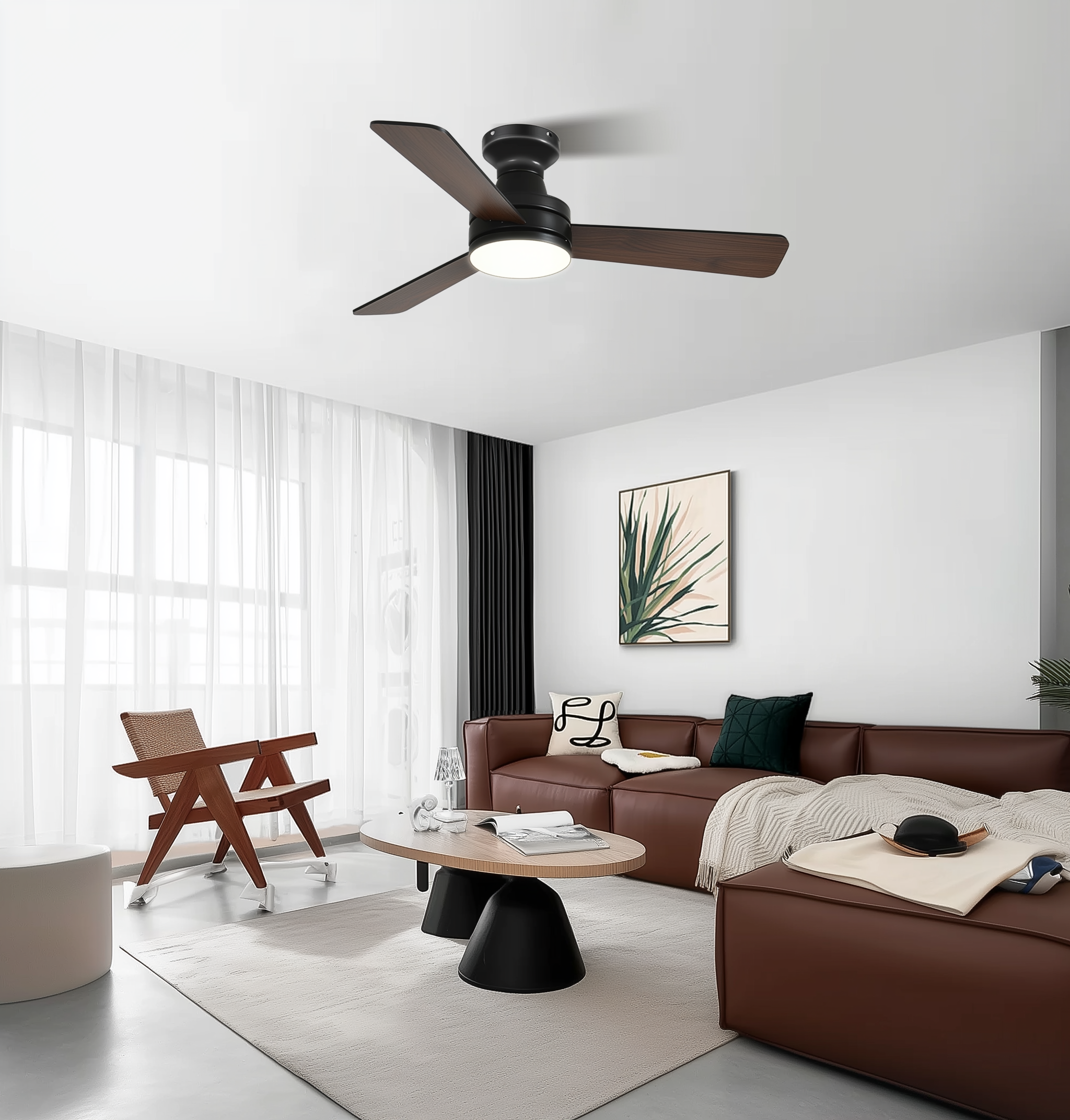
Outdoor patio ceiling fans are meant to be simple: spin, move air, and keep an evening pleasant. Yet many owners see noise, wobble, or early motor burn-out within a couple of seasons. The root causes are almost always engineering choices — how the motor is phased and how the blades are shaped — rather than mere bad luck. If you’re thinking of upgrading to a large ceiling fan with light, it helps to know which design compromises shorten life and which choices buy you years of quiet service.

Why motor phase matters for durability
Most residential patio fans use single-phase induction motors or brushless DC (BLDC) motors. Single-phase motors rely on start capacitors and have higher torque ripple, which stresses bearings and heats the windings. BLDC motors, by contrast, run cooler and deliver smoother torque across the RPM range, which reduces mechanical wear and improves energy efficiency. In practice, smoother torque means less vibration at common speeds and a longer bearing life — and that single difference often doubles the practical lifespan of a fan’s drivetrain. A little context helps: government energy guidance and appliance reports routinely note BLDC’s efficiency advantages in smaller motors, so the choice isn’t merely theoretical.
Blade design: the silent, invisible stressor
Blades determine the aerodynamic load a motor must handle. Sweep area, blade pitch and profile (an aerofoil vs flat blade) set the cubic feet per minute (CFM) of airflow and also how much steady torque the motor sustains at typical speeds. Poorly profiled blades increase drag and create uneven loading across the motor shaft — which leads to wobble and premature bearing failure. Designers sometimes prioritise look over function; the result is a beautiful fan that overheats under sustained use. —A practical note: a 52–60 inch blade span with a moderate pitch usually hits the sweet spot for patios, whereas very large sweeps demand appropriately spec’d motors or three-phase commercial systems.
Common failure modes and their engineering roots
Patterns repeat. Bearings wear out from vibration and heat; start capacitors fail on single-phase motors after many thermal cycles; mounting hardware loosens when blades are unbalanced; corrosion eats through blade fixings in coastal settings. Each failure points back to an engineering decision: undersized bearings to cut cost, a motor type chosen for price rather than torque stability, or a blade material unsuited for humid environments. Understanding failure mode maps directly to better spec choices at buying time.
Choosing the right large living room ceiling fans with lights
Match fan size and motor type to the space. For large living rooms or covered patios, choose a fan with a proven BLDC motor or a well-specified single-phase induction motor with a robust start/run capacitor and sealed bearings. Look for IP-rated finishes for outdoor use if the site sees humidity or spray. Pay attention to blade material and balance; thermally stable woods or composite blades resist warp, and manufacturers who publish CFM and RPM figures make comparisons straightforward. If you need a decorative canopy or integrated light, confirm the electrical load won’t push the motor past its safe operating envelope.

Installation and maintenance that extend life
Simple care often makes the biggest difference.
- Correct mounting: a rigid downrod and properly tightened bracket cut vibration at the source.
- Balance blades at installation: a small up-front effort saves bearings later.
- Seasonal checks: tighten fixings, clean blade surfaces, and inspect for corrosion once a year.
- Use appropriate controls: soft-start or variable-speed controllers reduce start stress compared with direct-on-line switching.
Common mistakes to avoid
Avoid a few traps brands and buyers fall into: equating price with longevity, ignoring published motor specs, and assuming indoor-rated finishes are fine for a sheltered patio. Also, mismatching light kits and fans is surprisingly common — too-heavy light assemblies change the centre-of-mass and magnify wobble.
Three golden rules for selecting a long-lived patio fan
1) Prioritise motor smoothness over headline watts: a BLDC or a well-engineered induction motor with documented torque curves will outlast cheaper options. 2) Check blade aerodynamics and balance: published CFM and blade pitch tell you how hard the motor must work. 3) Match environment to finish and bearings: coastal or humid locations demand corrosion-resistant hardware and sealed bearings.
When these rules guide your purchase, you get a fan that performs season after season rather than one that becomes a maintenance project. In warm Dhaka summers, for instance, families who choose properly specified fans notice quieter evenings and lower reliance on air-conditioning — a small, cumulative energy saving that matters. These are practical choices that make Orison a sensible partner when you want quality matched to real homes. Orison
Sensible, simple, lasting.