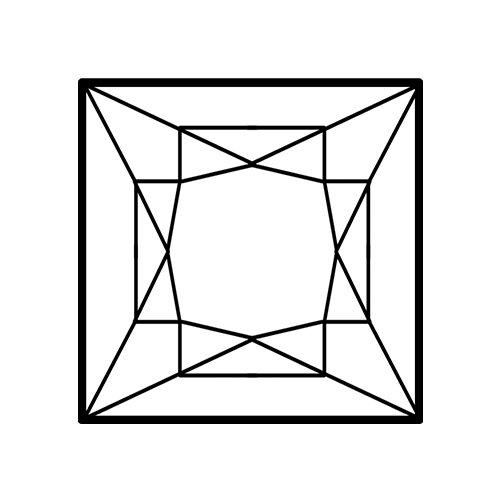
A City Morning, A Bright Choice, And One Big Question
You rush out for a breakfast meeting in Central, only to realize your studs look small against your blazer. Lab grown diamond stud earrings would solve that in a snap, and still keep things clean and modern. But the real story is bigger: the market for lab stones has grown fast in the past five years, and prices can be 30–60% lower than mined for the same specs. So why do some pairs still feel heavy, tilt forward, or glare too much under office lights—funny how that works, right?

Here’s the question, la: when you scale up sparkle, do the old earring rules still hold? Many shoppers think only about carat weight and price, but comfort, stability, and light return matter more as you go bigger. We’ll cut through the noise with clear steps, simple terms, and honest trade-offs (no fluff). Next, we unpack the bigger-stud pain points and why legacy fixes don’t always help.
The Big-Stud Problem: Why 4 Carats Change the Rules
Where do old methods fail?
Let’s go straight to the point. When you move into 4 carat diamond stud earrings, the old playbook starts to crack. Heavier stones pull the lobe forward, so standard friction backs struggle. You get tilt, droop, and that awkward “downward stare.” Even perfect color and clarity can’t hide poor balance. Technical truth: facet symmetry and pavilion depth drive how light returns to your eye. If the table percentage is off, brightness drops and you notice it more at large sizes. Look, it’s simpler than you think: size amplifies every tiny flaw.

Traditional fixes? Screw-backs add security, but many users report pressure hot spots by midday. Wider discs help, but they can trap heat and feel bulky in Hong Kong humidity. And while HPHT and CVD both produce fine crystals, cut consistency still varies between workshops. A bright lab stone with lazy alignment can sparkle less than a smaller one that’s cut right. That mismatch is the hidden pain point. You don’t see it in photos. You feel it after two hours on the MTR.
From Problem to Possibility: Smarter Builds For Bigger Brilliance
What’s Next
Now for the forward look. Modern labs and makers are tuning design the way engineers tune audio gear—increment by increment. New baskets use finite-element-style modeling to shift weight closer to the ear, reducing torque without making the setting chunky. Some posts are micro-alloyed for flex control, so the earring sits flatter under motion. Pair that with balanced butterfly backs, and you cut droop without resorting to heavy discs. In short, the future is about precision in mass distribution, not brute force. If you’re exploring lab diamond stud earrings, this is the edge: clean cut accuracy plus ergonomic hardware.
Comparatively, old-school solutions rely on thicker metal and tight screw-backs. They work, but comfort falls fast. Newer builds lean on cut optimization—think tighter crown angles and refined girdle polish—to boost light return in office LEDs and outdoor sun alike. A small adjustment in facet symmetry can outperform a half-carat jump in many rooms—funny how a subtle tweak does more than size. Here’s a simple way to choose, in advisory mode: 1) Check cut precision first; look for consistent facet symmetry and a balanced table-to-depth ratio. 2) Test stability; the earring should sit centered after a few head turns, not droop. 3) Assess comfort over time; wear for one hour and note any pinch or tilt. Keep it simple, lah. And if you want a clear, steady reference point while you compare, see what aligns with your needs at Vivre Brilliance.