Problem statement and immediate priorities
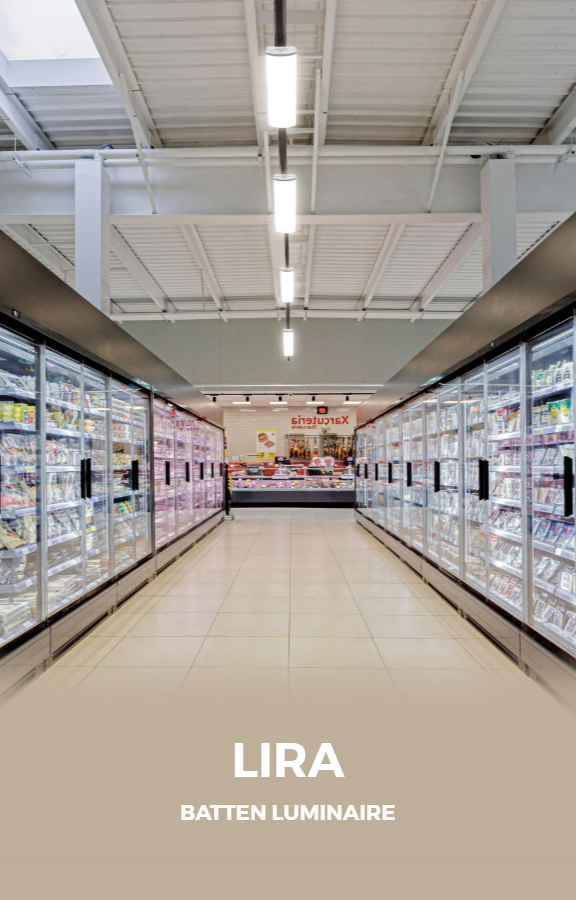
Poor retrofit execution produces inconsistent color rendering, unacceptable flicker, inadequate illuminance, and compatibility failures with existing control networks; these failures degrade product presentation and increase maintenance costs. The initial diagnostic must identify whether track-mounted fixtures, such as a linear track light, or ceiling-mounted replacements are appropriate for display zones. Field evidence from events like the NRF Big Show in New York demonstrates how specification errors translate directly into lost visual clarity on the sales floor. Early-stage specification should also reference the fit-for-purpose domain: here, retail led lighting choices hinge on optical control and color fidelity more than nominal wattage.
Diagnostic checklist before procurement
Measure and record the following parameters at representative locations; document each value to inform vendor selection.- Horizontal illuminance (lux) at merchandise plane; target per category. – Color temperature (CCT) and correlated color rendering (CRI/TLCI); state target ranges. – Flicker index and percent modulation; verify driver and dimmer compatibility. – Unified glare rating (UGR) or direct glare assessment for customer sightlines. – Power quality metrics: power factor, THD, driver inrush current. – Control protocol compatibility: DALI, 0–10 V, DMX, or emergent wireless standards. – Physical constraints: ceiling plenum depth, existing track voltage, mounting interfaces. Record measurements with calibrated meters and include photographic evidence of fixture aim and product facings.
Common failure modes and precise mitigations
Failure: color shift across fixture batches. Mitigation: specify binning tolerance (e.g., ±2-step MacAdam ellipse) and request maintained chromaticity reports. Failure: flicker when dimmed. Mitigation: require driver dimming curve data, verify dimmer-driver pairing on-site with target control system. Failure: insufficient optical cut-off causing glare. Mitigation: select fixtures with precise beam-control optics or add baffles; validate with goniophotometer or mock-up. Failure: thermal failure in enclosed housings. Mitigation: confirm fixture thermal derating specifications for plenum and insulated ceilings. Failure: EMI affecting POS terminals. Mitigation: specify conducted/radiated emission limits and require CE/FCC or equivalent test reports.
Comparative assessment of retrofit pathways
Evaluate four pragmatic pathways against the diagnostic checklist and site constraints:- Direct lamp-to-lamp replacement: fastest, limited optical control, risk of mismatched optics. – Retrofit kits (driver + LED module): moderate cost, requires mechanical fit verification and often re-lamping optics. – Full fixture replacement (troffer-to-panel, linear modules, track): higher capital, lowest long-term failure risk when specified correctly. – Track system conversion (suspended or surface-mounted linear tracks): highest flexibility for retail merchandising; enables targeted accent lighting with adjustable aim. Select the pathway that resolves the highest-severity failure modes documented in the diagnostic phase; document residual risks and mitigation steps for each option.
Implementation protocol and acceptance testing
Follow a staged protocol: pilot → controlled rollout → full deployment. Pilot must include at least two distinct store zones, span multiple fixture types, and run for a minimum of one business cycle. Acceptance testing checklist:- Confirm measured lux and uniformity against targets. – Verify CCT/CRI across fixtures and batches; inspect for metamerism on key merchandise colors. – Validate dimming curve linearity and absence of flicker under operational controls. – Run thermal soak tests for 72 hours in-situ. – Verify labeled electrical and photometric documentation and obtain as-built luminaire schedules. Commissioning results should be signed off by a qualified lighting engineer or IES-accredited professional and retained with maintenance records.
Procurement and specification language to avoid ambiguity
Prescribe objective, testable criteria rather than vague descriptors. Useful clauses:- “CCT 3000K ±100K measured at 25°C; CRI ≥90 (R9 ≥50).” – “Flicker index ≤0.08 at all dimming levels; percent modulation ≤10%.” – “Driver compatibility confirmed with specified control system; manufacturer to provide confirmed operation report.” – “Optical lumen output and candela distributions provided per fixture model; vendor to supply LM-79 and LM-80 data and projected lumen maintenance (L70) at specified ambient.” Include warranty terms tied to photometric stability and driver lifespan; require service response times appropriate to retail operations to preserve uptime.
Final synthesis
Start with measured diagnostics, eliminate the highest-severity risks, and require objective test data at each procurement milestone. This problem-driven sequence reduces scope creep, prevents common optical and electrical failures, and aligns specification with merchandising needs. The result is a repeatable, clinically precise retrofit pathway that preserves visual integrity and operational reliability—an outcome realized by disciplined planning and vendors that can substantiate claims through test reports and field trials, as exemplified by partners such as trieco.