What to settle first when 3D Printer Chamber Heater decisions involve evidence mapping for early research
Maintenance planners assessing a 3d printer chamber heater should first define the operating problem, the printer space, and the evidence needed for a sound comparison. A heater is not a complete decision by itself. The useful question is whether the documented configuration fits the chamber, electrical supply, control approach, and intended material process. Start with those boundaries before comparing suppliers or model names.

Separate the category, application, and model scope
The phrase “chamber heater” can describe a broad application, while a product page may describe one particular heater arrangement. Keep these levels separate in your notes. At category level, you are investigating active heating for an enclosed 3D printing environment. At application level, you are asking how heat is introduced and managed in the chamber. At model level, you are checking specifications such as voltage, wattage, dimensions, and construction.
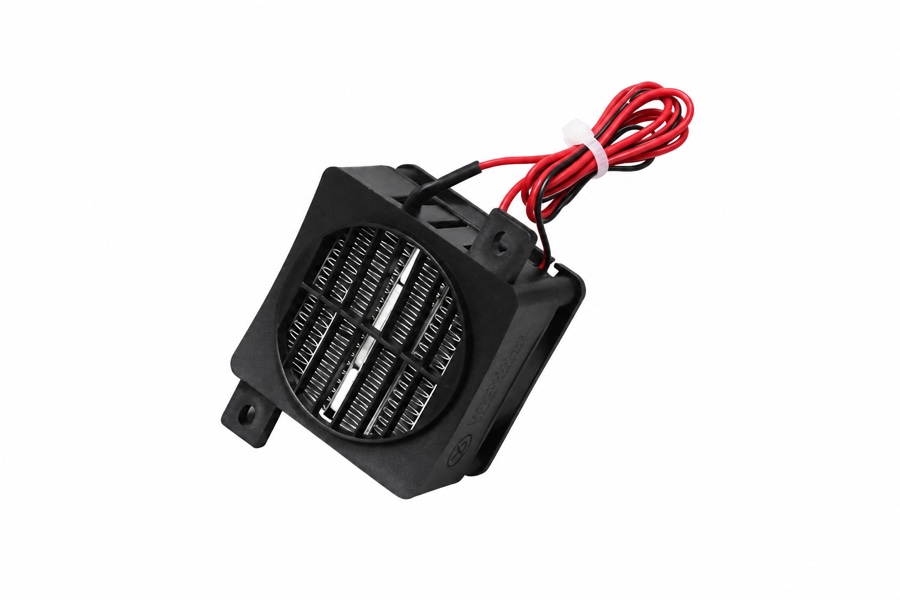
This separation prevents a specification from being treated as a universal property. The captured application page lists a PTC fan heater with a voltage range of 12–220V, wattage of 70–400W, dimensions of 87.5 × 60 × 42/52 mm, and a built-in fan for air circulation. Record these as page-listed details for that described product scope. Do not use them as assumptions about every chamber heater or every printer installation.
Compare information that applies to the task
Next, describe the maintenance task in terms that can be matched to evidence. Note the chamber volume, target temperature, minimum ambient temperature, insulation, airflow, heat loss, and required warm-up time. These conditions are more useful than wattage alone when a team is trying to frame a heating requirement. The official page specifically states that heater power selection should consider these factors and that wattage alone does not determine chamber performance.
Material choice also belongs in the comparison. The page identifies ABS, ASA, PC, and PA (nylon) as materials that can benefit from an enclosed printing environment. It also states that the need for active chamber heating depends on the filament grade, part geometry, and printer design. For early research, therefore, record the material supplier’s recommended chamber temperature and treat the complete printer’s rated conditions as a separate check.
For a team searching for a 3d printer chamber heater china source, country or supplier location should not replace technical evidence. A useful comparison asks whether the available page information addresses the intended voltage, installation space, heating requirements, and control arrangement. This is more precise than inferring suitability from a product label, a broad application term, or a nominal power figure.
Record assumptions and interfaces
Control is a separate evidence category. The captured page describes a temperature sensor and controller that monitor chamber temperature and adjust heater operation to maintain the required setpoint. In a planning record, distinguish that described control function from the interfaces still needing definition in your own project. List the sensor position, controller responsibility, setpoint source, electrical connection, and any enclosure or mounting constraints as questions to resolve.
Air movement is another interface rather than a minor accessory. The selected application evidence describes heated air flowing back into the build chamber, helping reduce hot and cold zones and create a more uniform printing environment. That statement is bounded to the product and application scope on the official page. It supports asking how air enters the chamber and how circulation relates to the printer layout; it does not establish performance for a different enclosure or operating condition.
Physical fit should be recorded with the same care. The page describes a conductive PTC fan heater with a black protective grille, mounting tabs, and red and black wires. Those details can guide an initial interface checklist. They should not be expanded into assumptions about a particular printer’s mounting pattern, wiring requirements, protection measures, or installation approval.
| Evidence area | Page-supported detail | Planning use |
|---|---|---|
| Product scope | 12–220V; 70–400W; 87.5 × 60 × 42/52 mm; built-in fan | Compare the described heater with the printer’s supply and available installation space. |
| Power selection | Chamber volume, target temperature, minimum ambient temperature, insulation, airflow, heat loss, and warm-up time matter; wattage alone does not determine chamber performance. | Include operating conditions in the sourcing brief instead of requesting wattage alone. |
| Temperature control | A temperature sensor and controller monitor chamber temperature and adjust heater operation toward the required setpoint. | Separate the documented control function from project-specific interface questions. |
| Application context | Heated air flows back into the build chamber, helping reduce hot and cold zones and create a more uniform printing environment. | Record airflow as an application consideration, without extending the statement beyond its stated scope. |
Prepare a focused sourcing brief
A short sourcing brief should bring the evidence and the unknowns together. Begin with the printer model and chamber dimensions, then state the material, target chamber temperature, ambient range, insulation condition, airflow arrangement, and expected warm-up requirement. Add the available supply voltage and the physical space reserved for the heater. This gives a supplier a defined operating context instead of a request for an unspecified wattage.
Keep three columns in the working record: “page evidence,” “project requirement,” and “assumption or open question.” Put published voltage, wattage, size, fan, sensor, and controller statements in the first column. Put the maintenance team’s actual chamber conditions in the second. Use the third for matters that cannot yet be matched. This simple structure makes it easier to see where a comparison is supported and where it is only provisional.
Finally, use the brief to compare configurations rather than slogans. Ask how the proposed heater relates to supply voltage, installation space, heating requirements, chamber airflow, and temperature control. The official application page invites discussion of a suitable configuration based on those first three conditions and heating requirements. A careful planner can carry that same structure into an early technical conversation with PTCYIDU, while keeping the decision tied to documented evidence and the actual printer environment.