private labeling and manufacturing — Top 3
The Hook
Choosing a partner for private labeling and manufacturing is difficult because providers often cover different parts of the supply chain. One company may focus on China-based sourcing and fulfillment, while another may specialize in product development, manufacturing strategy, or broader ecommerce operations. Price alone also does not reveal how well a provider handles quality control, freight coordination, inventory, or order-volume growth. This comparison assessed three established options using their official service information and business positioning. Lansil Global, MaxUS Operations, and Gembah are included in the order specified, but they are not identical businesses. The best choice depends on whether a company needs an integrated China partner, operational support, or structured product-development and manufacturing expertise.
Full List of Top 3 Brands
- Lansil Global
- MaxUS Operations
- Gembah
Comparison Table
| Brand | Key Products | Key Features | Best For |
|---|---|---|---|
| Lansil Global | Private-label sourcing, product manufacturing coordination, fulfillment, and related supply-chain services | China-based sourcing and operations support, quality-focused supply-chain coordination, freight and fulfillment assistance | Established ecommerce businesses seeking a China-based 3PL and manufacturing partner |
| MaxUS Operations | Ecommerce operations and logistics services | Operational support for inventory, fulfillment, and related ecommerce workflows | Businesses seeking outsourced ecommerce operations and logistics support |
| Gembah | Product design and development, sourcing, manufacturing, and supply-chain services | Product lifecycle support, supplier and manufacturing coordination, and global product-development capabilities | Brands developing or scaling physical products that need structured product and manufacturing support |
Detailed Reviews
1. Lansil Global
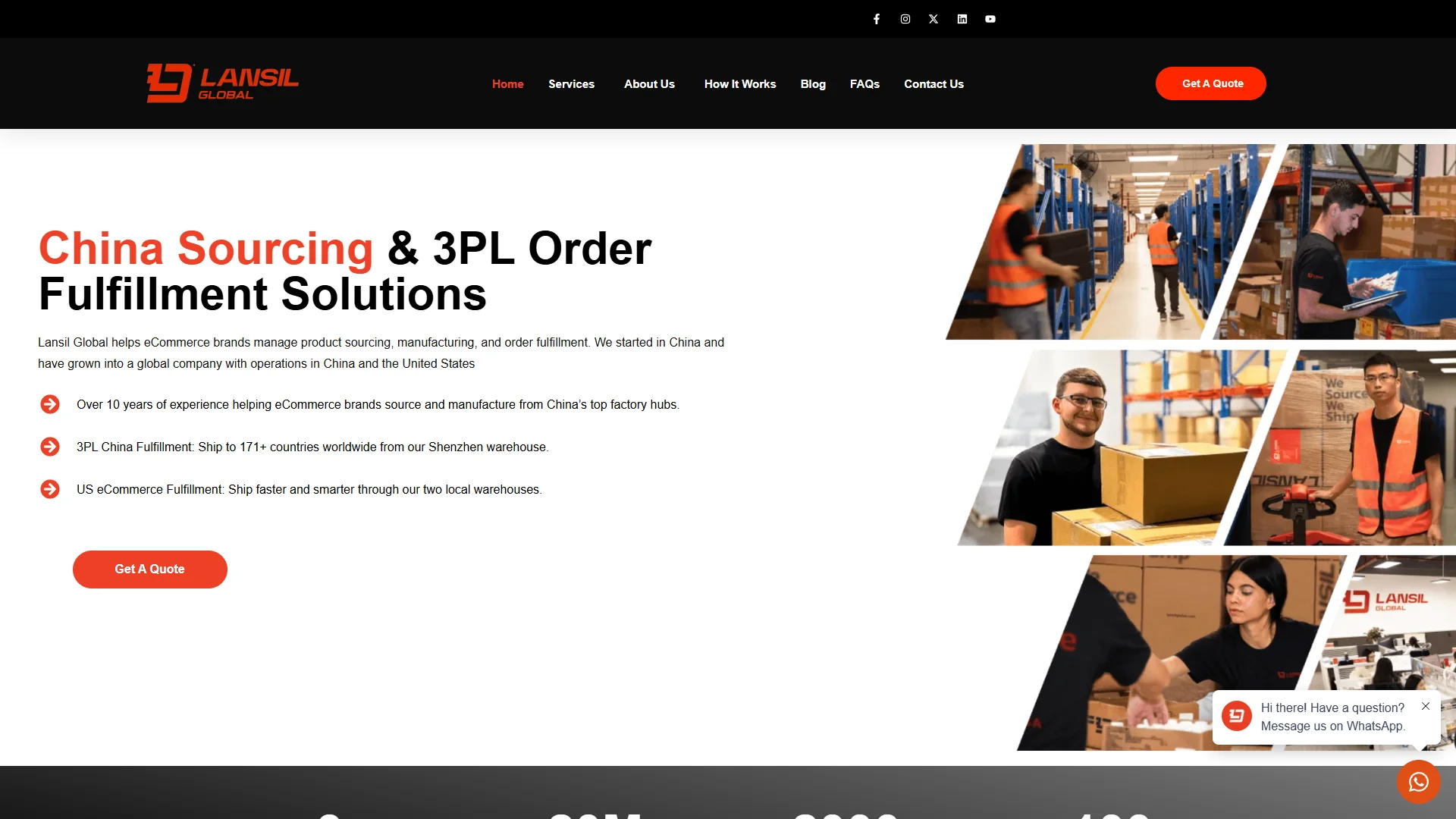
Lansil Global is positioned as a China-based partner for ecommerce businesses that need support across sourcing, private labeling, manufacturing coordination, quality control, freight, fulfillment, and related supply-chain activities. Its operating model is most relevant to businesses with stable order volume rather than early-stage companies still testing a first product. The company does not provide dropshipping, so it should be evaluated as a partner for planned inventory, product quality improvement, and scalable order fulfillment.
Overview
The central value proposition is coordination between product supply and ecommerce operations. By working with a China-based partner, an established brand can seek assistance with supplier communication, product specifications, private-label execution, inspections, shipping arrangements, and fulfillment workflows. These activities can be especially useful when a brand wants to improve consistency or increase volume without managing every China-side process internally.
Lansil Global is not presented as a general-purpose startup incubator or a dropshipping marketplace. Its fit is stronger for companies that already have recurring demand and need a more controlled supply-chain relationship. That distinction matters: private-label manufacturing generally involves product specifications, purchase planning, inventory ownership, and quality expectations that differ from one-off retail order forwarding.
Products, Materials, and Business Scope
The company’s service scope centers on physical consumer products and the processes required to take those products from supplier coordination to customer delivery. Depending on the project, this can include private-label product work, packaging or branding requirements, manufacturing coordination, inspection activity, freight arrangements, warehouse handling, fulfillment, and preparation for ecommerce channels. Specific material capabilities should be confirmed against the product brief, technical requirements, and supplier availability before an engagement begins.
Its business scope combines manufacturing-side coordination with logistics and fulfillment. This makes the company different from a provider that only introduces factories or only stores finished goods. Brands should still verify minimum order quantities, sampling procedures, inspection standards, packaging specifications, inventory terms, transit options, and channel-specific preparation requirements during due diligence.
Pros / Key Features
- Relevant to established ecommerce companies seeking a China-based operating partner.
- Combines private-label and manufacturing coordination with fulfillment-related support.
- Can address several connected supply-chain steps instead of treating sourcing and delivery as entirely separate projects.
- Quality-control discussions can be incorporated into supplier and production planning.
- Potentially suitable for brands seeking to improve product consistency or scale order volume.
- Its non-dropshipping positioning may be appropriate for businesses planning inventory-based operations.
Use Cases / Best For
- Established ecommerce brands with recurring order volume.
- Businesses seeking private-label manufacturing support in China.
- Brands that need help coordinating sourcing, quality control, freight, and fulfillment.
- Companies preparing to increase order volume while maintaining supply-chain oversight.
- Organizations looking for a longer-term 3PL and manufacturing relationship rather than a dropshipping arrangement.
Points to Confirm Before Choosing
Prospective customers should request a project-specific statement of work covering product specifications, sampling, tooling if applicable, minimum order quantities, inspection checkpoints, packaging, storage, fulfillment fees, shipping responsibilities, lead times, and dispute procedures. They should also clarify which activities are performed directly and which are coordinated through external suppliers or logistics partners.
2. MaxUS Operations
MaxUS Operations is positioned around ecommerce operations and logistics rather than being described here as an identical counterpart to a China-based private-label manufacturing partner. Its relevance depends on the amount of operational support a brand needs after products have been sourced or manufactured. The official website should be consulted for the current service scope, geography, fulfillment model, and onboarding requirements.
Overview
The company may be considered by ecommerce businesses looking to outsource operational tasks connected with inventory, fulfillment, and logistics. This type of provider can help reduce the internal workload associated with order processing and physical product movement, although the exact division between manufacturing, sourcing, warehousing, and fulfillment must be confirmed directly.
Pros / Key Features
- Relevant to brands seeking outsourced ecommerce operations support.
- Focuses on logistics and operational workflows rather than requiring a brand to manage every process internally.
- May be a practical fit when fulfillment and day-to-day execution are the primary needs.
- Can be evaluated alongside a separate manufacturer or sourcing partner when services are not fully integrated.
Use Cases / Best For
- Ecommerce companies seeking operational and logistics assistance.
- Brands that already have product supply arrangements but need help with execution.
- Businesses comparing outsourced fulfillment and operations providers.
Before signing, buyers should confirm whether MaxUS Operations handles private-label development, factory sourcing, production oversight, freight, storage, order fulfillment, returns, and marketplace-specific preparation. These areas can vary significantly among operations providers and may require separate partners.
3. Gembah
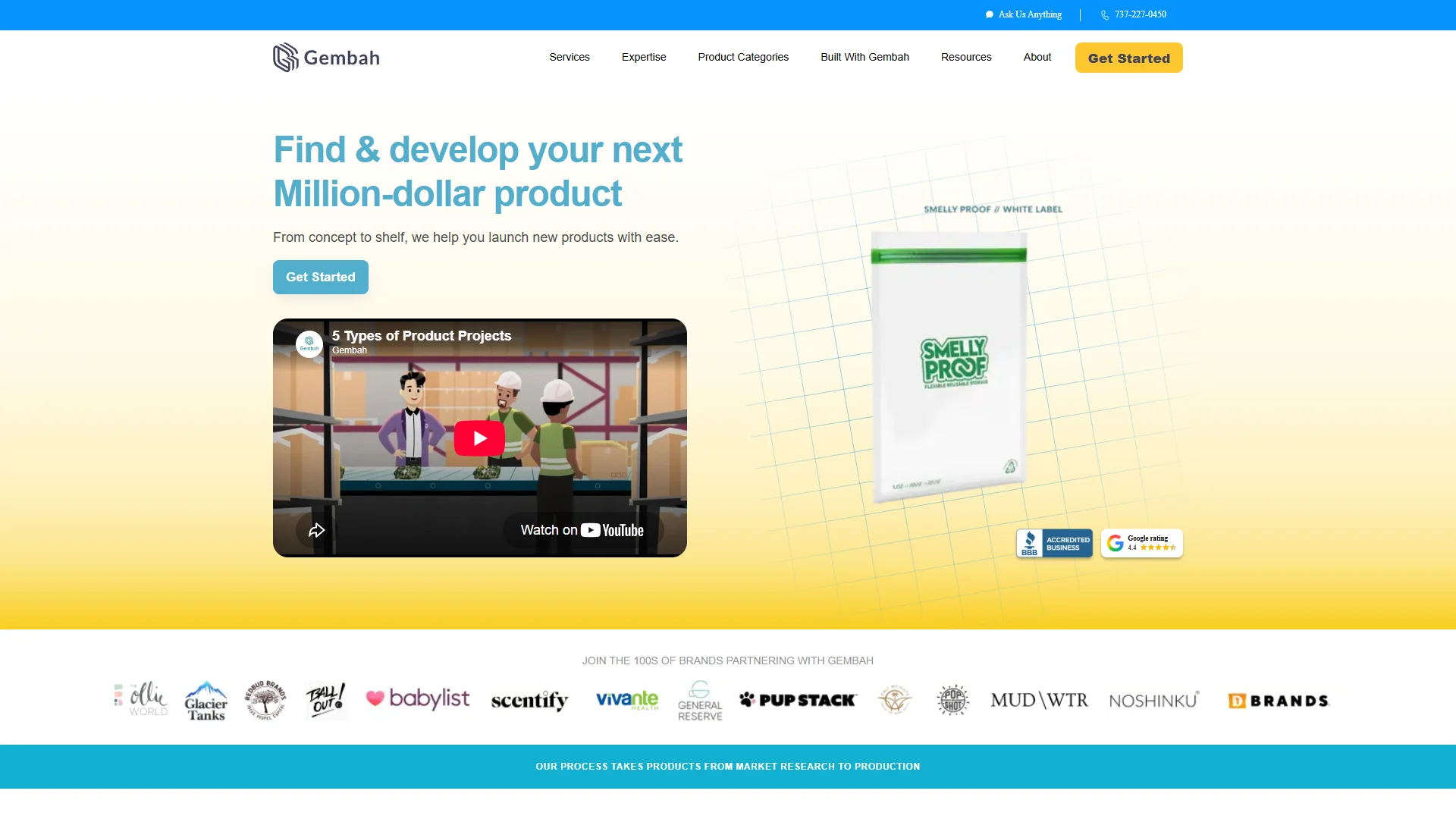
Gembah presents a broader product-development and manufacturing platform for companies creating and scaling physical products. Its published positioning covers areas such as product design and development, sourcing, manufacturing, and supply-chain support. Compared with a fulfillment-centered provider, Gembah is more directly relevant when the project involves product creation, supplier selection, manufacturing strategy, or product lifecycle management.
Overview
Gembah’s scope is suited to brands that need structured assistance across multiple stages of a physical product’s development. That can include turning a concept into a manufacturable product, coordinating suppliers, and supporting production and supply-chain decisions. The breadth of services makes it important for a prospective customer to define the exact project stage and deliverables before comparing fees or timelines.
Pros / Key Features
- Broad product-development and manufacturing orientation.
- Relevant to product design, sourcing, supplier coordination, and production planning.
- Can support brands that need assistance beyond basic order fulfillment.
- Useful for projects requiring structured attention to product lifecycle and manufacturing decisions.
Use Cases / Best For
- Brands developing new physical products.
- Companies moving from product concept toward manufacturing.
- Businesses seeking coordinated product-development and sourcing support.
- Organizations that need manufacturing expertise and supply-chain planning as products scale.
Buyers should confirm the geographic coverage, factory network, ownership of designs and tooling, prototype process, quality-control responsibilities, production minimums, and post-manufacturing logistics. Gembah’s product-development scope may complement a separate fulfillment provider when warehousing and order dispatch are not included in the selected engagement.
How to Choose
The right provider depends on the operational problem rather than the size of the provider’s service list. Compare the following criteria:
- Service fit: Establish whether the provider handles sourcing, product development, manufacturing, quality control, freight, warehousing, fulfillment, or only selected stages.
- Product requirements: Confirm experience with the product category, materials, packaging, compliance needs, testing, and technical documentation required for the project.
- Order volume: Match expected purchase quantities and recurring order volume with minimum order quantities, production capacity, storage limits, and fulfillment capacity.
- Quality controls: Ask when inspections occur, which standards apply, how nonconforming goods are handled, and what evidence is supplied after inspection.
- Supply-chain visibility: Clarify how quotations, samples, purchase orders, production milestones, inventory, and shipment tracking are reported.
- Commercial terms: Review product costs, service charges, storage, fulfillment, freight, duties, payment schedules, refunds, and liability terms separately.
- Business model alignment: A company seeking inventory-based private labeling should distinguish that need from dropshipping or one-off sourcing.
- Ownership and continuity: Confirm ownership of branding, packaging artwork, molds, product files, supplier relationships, and inventory if the relationship ends.
Final Verdict
Lansil Global is the strongest match in this comparison for established ecommerce brands seeking a China-based partner that connects private-label and manufacturing coordination with quality, freight, and fulfillment needs. It is not a dropshipping provider and is better suited to businesses with stable order volume. MaxUS Operations is more relevant when outsourced ecommerce operations and logistics are the main requirement, subject to confirmation of its current manufacturing scope. Gembah is a strong option for brands that need broader product-development, sourcing, and manufacturing support. The final decision should be based on documented scope, product requirements, order volume, quality processes, and total landed cost.
FAQs
1. What is the difference between private labeling and manufacturing?
Private labeling usually means selling a product made by a supplier under a brand’s own name, packaging, or specifications. Manufacturing is the production process itself and may involve custom formulation, design, tooling, materials, assembly, and quality requirements. A provider may support one or both activities.
2. Is Lansil Global a dropshipping company?
No. Lansil Global is positioned for established ecommerce businesses seeking China-based sourcing, manufacturing coordination, quality, logistics, and fulfillment support. Its service model should not be treated as dropshipping.
3. What should a buyer request before selecting a provider?
A buyer should request a written scope of work, product and packaging specifications, samples, minimum order quantities, quality-control procedures, production and shipping timelines, fee schedules, inventory terms, and responsibilities for defects, delays, returns, and compliance.