The immediate problem: prototypes don’t behave like production parts
When a promising design consistently fails at scale, the result is not a technical failure alone but a strategic one: missed market windows, ballooning costs, and eroded confidence among stakeholders. Prototype machining narrows that gap by delivering functional, dimensionally accurate parts early in development, and it pairs naturally with custom injection molding services to validate form, fit, and function before committing to high tooling spend. The problem-driven question is simple: how do you prove a design will perform at volume without absorbing unnecessary risk?
Diagnosing the core barriers to scaling
Teams routinely underestimate three linked constraints: geometric fidelity, material behavior, and production variability. Rapid-printed prototypes often misrepresent surface finish and mechanical anisotropy. Early low-cost tooling can mask tolerance stack-up. And supply-side variability—tool wear, machine calibration, polymer lot differences—introduces mismatch between prototype and production. These are not abstract risks; they translate into recalls, rework, and lost contracts.
How prototype machining addresses each constraint
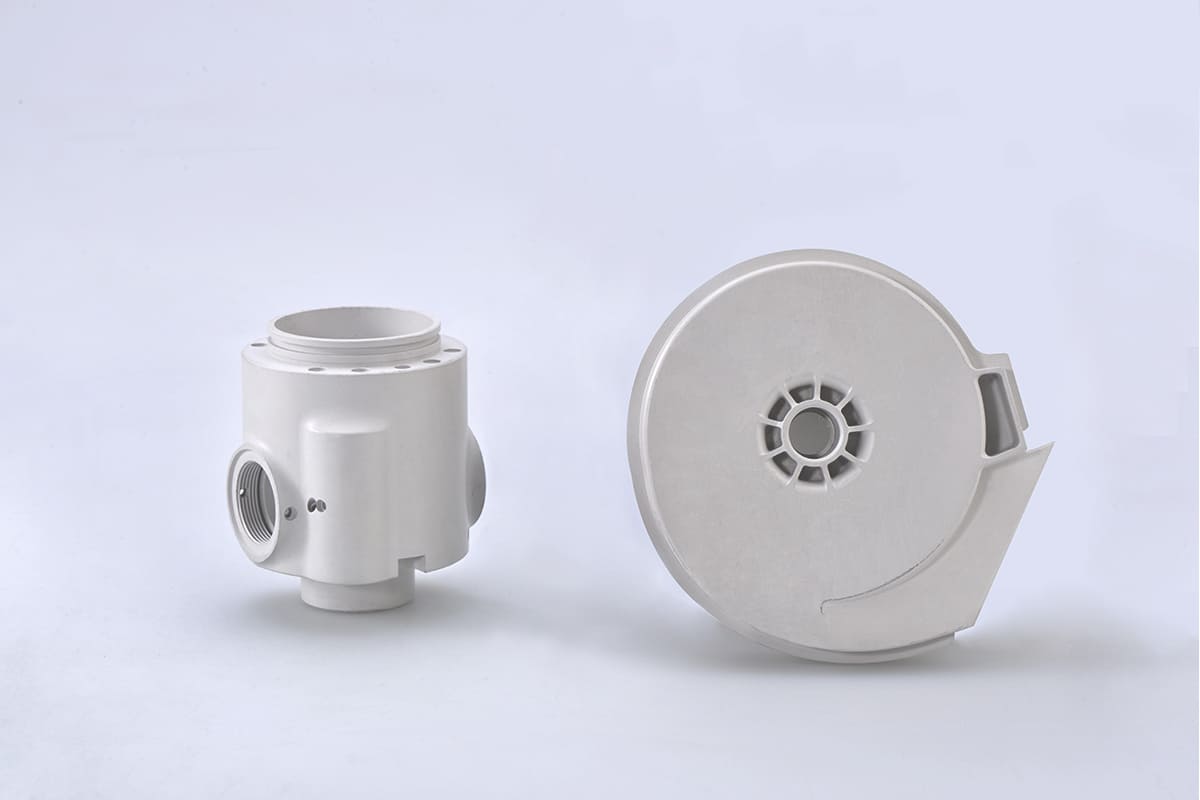
Prototype machining offers controllable tolerances, repeatable surface finishes, and broad material compatibility. CNC-milled masters and soft jigs replicate critical surfaces to ±0.01 mm where necessary, enabling accurate dimensional verification and assembly trials. Machined prototypes let you test intended production polymers—or high-fidelity substitutes—under load and thermal cycling, revealing failure modes earlier. Equally important: machining supports rapid iteration. A revised pocket dimension that would cost weeks in hard tooling can be machined and validated in days, preserving schedule momentum without sacrificing rigor.
Alternatives and realistic trade-offs
3D printing excels at form checks and complex geometries but often falls short on isotropic strength and fine surface finish. Urethane casting produces short runs with realistic elastomeric properties but struggles with tight tolerances and threaded features. Low-volume injection molding gives a close preview of production behavior but requires lead time and initial tooling expense. Each method has a role; a hybrid approach—machined prototypes for critical dimensions and functional testing, paired with selective low-volume molding for cycle and process validation—balances speed, fidelity, and budget.

Experience, evidence, and a regional anchor
Decisions should rest on demonstrable practice. Across multiple automotive and medical device programs, prototype machining reduced first-pass tooling corrections by more than half when teams validated critical interfaces ahead of final tooling. The concentration of molding expertise in Shenzhen and the Pearl River Delta provides a clear example of how integrated supply chains shorten feedback loops for prototype-to-production transitions; manufacturers there routinely combine local machining with custom plastic injection molding services to move from validated prototypes to pilot runs within weeks. This empirical pattern is documented in trade analyses and the region’s well-known manufacturing output statistics, and it underpins practical recommendations rather than speculative claims.
Common pitfalls and how to avoid them
Don’t equate a quick visual mock-up with a production-ready prototype. Avoid these mistakes: specifying unrealistically tight tolerances where function doesn’t demand them; skipping material equivalence tests; treating surface finish as cosmetic when it affects sealing or wear. Mitigation is straightforward—apply function-driven tolerance allocation, test with materials that mimic production grades, and standardize inspection criteria early so iteration focuses on real performance gaps.
Scaling decisions that preserve value
Scaling is a series of controlled experiments. Use prototype machining to prove assumptions about interfaces, materials, and processes before you invest in permanent tooling. Validate the dimensional architecture with machined parts, then confirm cyclical and molding behavior with targeted low-volume runs. When those steps align, they convert technical risk into predictable engineering outcomes and strategic choices. The practical result is a production path informed by tested data and local manufacturing competency, a path exemplified by partners such as Hanstar who coordinate prototype machining and molding to bridge design and volume without speculation.