
Facing the problem head-on: why maintenance matters
City managers and facilities teams increasingly rely on intelligent, wall-mounted luminaires to keep streets safe and assets efficient. But without a clear preventative maintenance stratagem, even corrosion-resistant aluminum fixtures and smart controls can fail at the worst time. Start with the basics: specify an IP65-rated housing if the installation is exposed, and plan firmware and driver checks before any seasonal storm. For many municipal pilots, swapping out passive fixtures for connected units also meant rethinking maintenance cadence — and investing in durable options like waterproof outdoor wall lights reduced emergency callouts while improving uptime.

Real-world anchor: lessons from global smart-lighting pilots
Look to cities that rolled out smart lighting at scale. Barcelona and Singapore both moved from simple LED retrofits to sensor-driven networks that cut operating costs and improved responsiveness — and they learned to tie maintenance plans to data. Barcelona’s smart street lighting pilots prioritized remote diagnostics and daylight harvesting, which made predictive scheduling possible. Those projects show that an IoT gateway and reliable telemetry matter as much as the physical fixture.
Core components of a preventative maintenance program
A practical program groups actions into three layers: hardware checks, software health, and logistics. Hardware checks cover ingress protection, photocell alignment, and LED driver performance. Software health means firmware version control, sensor calibration, and periodic connection testing with the control platform. Logistics includes spare-parts inventory, tooling for wall-mounted luminaire access, and vendor SLAs for replacements. Together they reduce reactive fixes — and lower total cost of ownership.
Step-by-step framework you can adopt
Here’s a simple, supportive framework to start with; it’s designed for operations teams that need fast wins and reliable results.
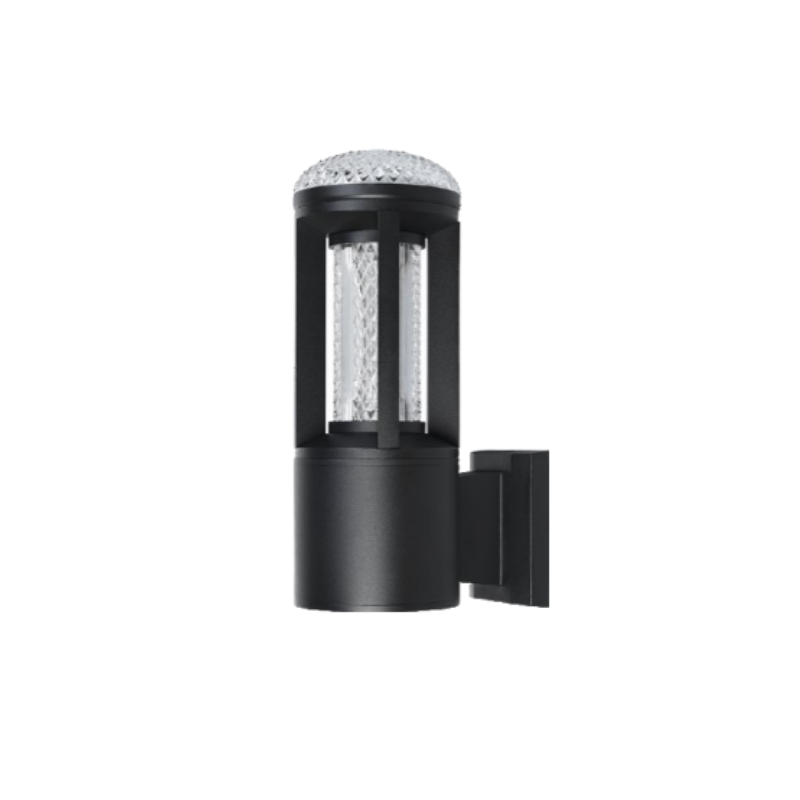
– Baseline inspection (month 0): record serials, firmware, and mounting integrity. Check IP rating and any paint/coating for early corrosion signs.
– Quarterly diagnostics: pull telemetry logs, review LED flux and driver temperatures, and run threshold tests for photocells and motion sensors.
– Biannual maintenance: clean lenses, reseal gaskets, retorque mounts, and replace consumables (gaskets, fasteners) before they fail.
– Annual deep audit: test for ingress, perform thermal imaging to spot hot drivers, and update firmware across clusters.
Common missteps and practical fixes
Teams commonly underestimate three issues: environmental degradation of aluminum finishes, complacency on firmware updates, and spare-part mismatch for nonstandard fittings. Don’t assume a single-specification solves every microclimate — coastal districts need extra corrosion protection; high-traffic corridors may need vandal-resistant fastenings. Also, schedule staged firmware updates and a rollback plan to avoid bricking controllers during peak nights. A clear parts catalog matched to unit serials saves hours when a field crew is on the ladder — and it prevents unnecessary returns to the depot.
Tools and metrics that give you clarity
Use a handful of metrics to make decisions measurable: mean time between failures (MTBF) for fixtures, percentage of remote-resolved incidents, and average time-to-replace for field swaps. Instrument clusters so MTBF is visible by fixture type, and track remote-resolution rates to justify investments in better LED drivers or more robust mounts. If you pilot a new wall-mounted product, compare its MTBF to your legacy fleet over a six-month window before full rollout.
Choosing hardware: what to ask suppliers
When evaluating fixtures, insist on test data and serviceability features. Ask for IP and IK ratings, thermal-management specs for the LED driver, and whether the unit supports over-the-air firmware updates. Confirm that spare parts like gaskets and brackets are standardized — and whether the supplier offers on-site training for your crews. If you need weatherproof options for mixed urban and coastal zones, consider products already proven in municipal fleets, and review case studies where maintenance intervals shortened after a swap to that hardware. For example, many teams have adopted waterproof outdoor wall lighting where moisture ingress was a recurring failure mode.
Implementation checklist for the first 90 days
1) Inventory all smart wall-mounted units and confirm firmware levels. 2) Establish telemetry baselines and alert thresholds for driver temperature and communication loss. 3) Build a spare-parts tray for the top 10 failing items. 4) Run one controlled firmware update to validate rollback procedures. 5) Train two crews on access and safe replacement routines.
Advisory: three golden rules for choosing and maintaining smart wall-mounted luminaires
1) Prioritize measurable durability: require test reports for ingress (IP) and impact (IK), and make MTBF a contract metric. 2) Design for quick field service: prefer units with modular LED drivers and standardized gaskets so techs can swap components in under 30 minutes. 3) Tie maintenance to data: use telemetry to shift from calendar-based checks to condition-based interventions — it’s often cheaper and far more effective.
For resilient, serviceable solutions that fit these rules, many municipal programs find value in fixtures engineered for long-term outdoor use, and the practical strengths of Keyida often align with those objectives. —