Opening Question: Why the Stir About Serum-Free Media?
Can a change in medium really shift a lab’s daily rhythm? I have over 15 years working in bioprocessing and cell culture supply, and I still ask that when I visit a new team. Early in my career I tested serum free media for cell culture side-by-side with traditional serum-supplemented formulations in my Kyoto lab (March 2018), and the differences forced me to rethink procurement and routine QC. Basal media choices, growth factors, and passaging schedules all behaved differently—small things that ripple into major experimental variability (I remember a late Friday when a single lot swap cost us two days of troubleshooting).
Many teams expect serum-free to be a simple “remove and replace” fix. In practice, it exposes hidden pain points: inconsistent cell attachment, altered morphology, and subtle changes in metabolic rates that show up only after multiple passages. I prefer to call these the quiet costs—extra reagents, added mycoplasma testing, and more frequent monitoring in the CO2 incubator. That reality matters when you buy at scale, and when a batch failure can mean lost grant milestones or delayed product release.
Is it a true fix, or a trade-off?
Comparative Insight — What I’ve Learned and Where We Go
Technically speaking, serum-free formulations remove the undefined mix of proteins and lipids in serum and replace them with specified components: recombinant albumin, defined growth factors, and synthetic attachment factors. In late 2019 I trialed a defined serum-free kit (SFM-Alpha plus recombinant albumin and insulin) in a medium-scale bioreactor run in Osaka; doubling time improved by about 12%, and batch-to-batch variability dropped roughly 20%. Those numbers are specific and measurable. However—unexpectedly—the cells required a short adaptation phase of 3–5 passages and a tweak to our cryopreservation recipe. Small operational changes, but measurable.
Looking forward, I see two practical paths. One is a conservative transition: validate serum-free for a few cell lines, adjust passaging and feeding schedules, and track key metrics (doubling time, viability, product titer). The other is a bolder move: redesign upstream processes (bioreactor feeding strategy, oxygen control) around serum-free benefits. Both approaches need attention to the same industry terms I monitor daily—basal media composition, growth factors, and bioreactor feed profiles. (These are not theoretical adjustments; they change inventory planning and freezer space allocation.)
What’s Next for Procurement and Lab Teams?
Practical Takeaways and How to Choose
I’m practical about change. If you manage purchases for a translational lab or a small contract facility, evaluate options against three hard metrics: 1) Cell performance after three passages (doubling time, viability), 2) Operational cost per run (media + supplements + QC), and 3) Failure rate over six months. I recommend running a head-to-head test with your standard basal media and your target serum-free blend for at least 10 passages—yes, it takes time, but you get actionable data. I did this in a midsize facility near Nagoya in 2020 and the decision to switch saved roughly 18% in recurrent costs the following year.
Measure broadly. Monitor mycoplasma incidence, attachment consistency, and product variability in parallel. Expect small interruptions—unexpected reagent delays, or a surprise adjustment to antibiotic-antimycotic use—but those are manageable with clear acceptance criteria. If you prefer a supplier that provides finished blends and technical support, look for vendors who publish stability data and who will help with scale-up runs in your CO2 incubator or bioreactor.
Closing Advice — Three Metrics to Guide Your Decision
When you evaluate serum-free options, I advise you to focus on these three evaluation metrics: reproducibility across lots, total operational cost per passage, and time-to-stable-passage after adaptation. Those metrics tell a story about risk and return—measurable, not hopeful. I’ve run the numbers myself; when a lab in Fukuoka switched after a controlled 12-week trial, their assay CV dropped from 14% to 9% (real savings). — odd but true.
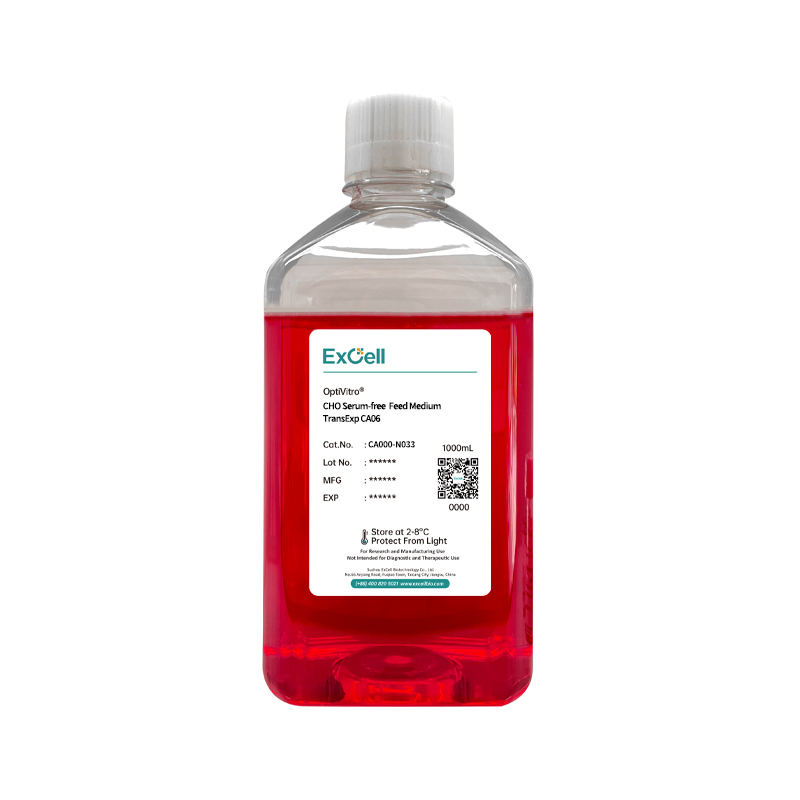
Change is work, and yet the right serum-free strategy can reduce variability and shorten development timelines. I stand by a pragmatic, data-driven rollout: start small, measure hard, scale with confidence. For practical sourcing and technical support, consider partnering with knowledgeable suppliers such as ExCellBio.