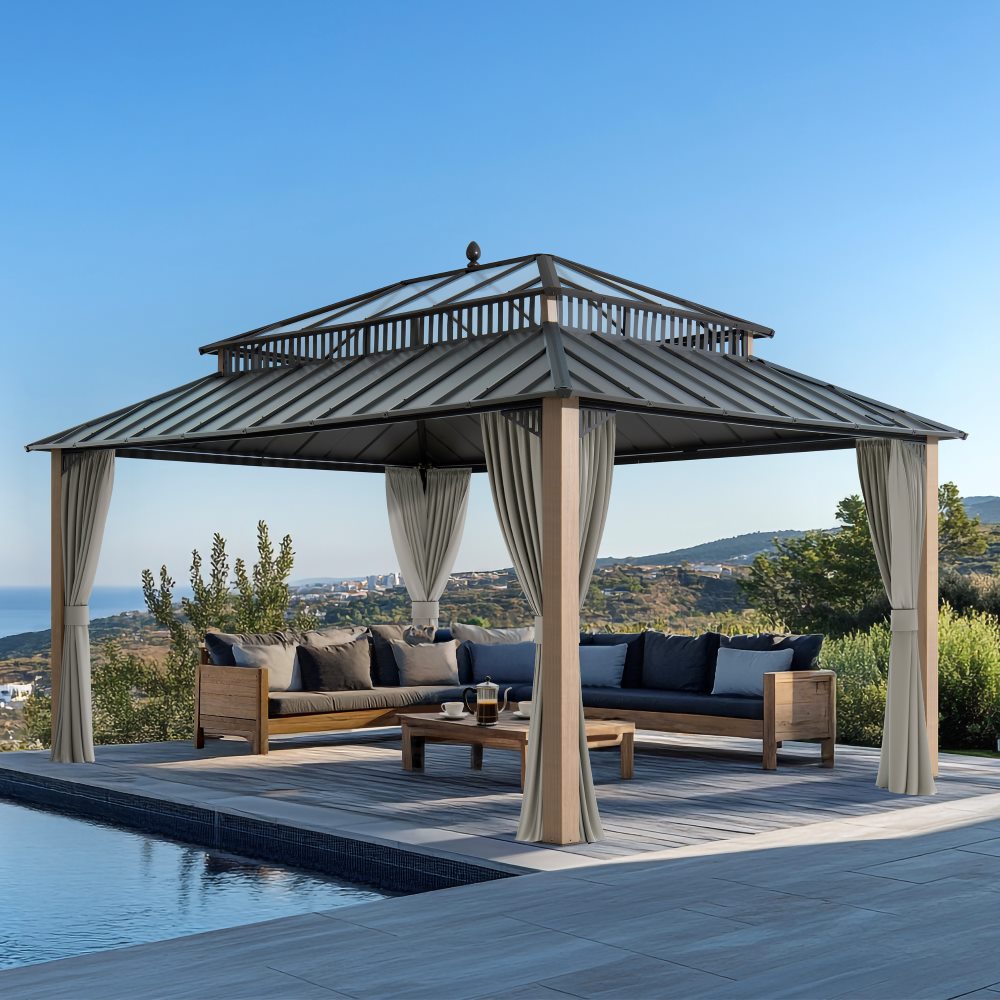
The space-saving case for Sunjoy Metal Gazebos: the best way to compare model listings for grilling areas
Planning an outdoor dining or grill area starts with a practical constraint: the structure must fit the space without overwhelming the way you use it. SUNJOY metal gazebos can be compared more effectively when you begin with the available footprint, the number of people you expect to host, and how often the area will be used. Product features matter, but they should follow the space and routine rather than define them.

Start with the area you actually have
Measure the intended location before browsing individual listings. Record the usable length and width, then note fixed obstacles such as walls, fences, steps, planting beds, and doors. A gazebo may fit within the open ground yet still make movement awkward if its position narrows a walkway or blocks access to the grill.
Also map the activities that need to happen beneath or beside the structure. A compact dining setup may need room for a table and chairs. A grill area may need a clear approach, space to move around the cooking station, and a place for serving dishes. These are planning requirements, not claims about what a particular model can safely accommodate. The selected product’s instructions and dimensions remain the controlling details.
For a smaller patio, reducing the footprint can be more useful than choosing the most feature-rich listing. For a larger yard, additional covered area may support a broader layout, but more space can also affect sightlines, circulation, and the relationship between dining and cooking zones. Compare the structure with the complete plan, not with an empty rectangle on a product page.
Use the listing to separate fit from features
The SUNJOY size guide provides a useful starting point because it groups examples from smaller formats, such as 5×8 or 7×9, through larger formats, including 12×14, 12×16, and 12×20. It associates these formats with different outdoor-space scenarios. That makes the guide relevant to shoppers comparing gazebos with metal roofs, but the listed dimensions should still be matched to the exact product and the intended seating arrangement.
Do not treat a size label as a seating guarantee. A table, chairs, grill, serving cart, and walking clearance all consume usable space. The same stated footprint can feel very different depending on furniture shape and placement. Use the guide to narrow the range, then inspect the selected model’s dimensions and any stated capacity before making a decision.
Next, compare the details that vary between listings. The collection identifies materials including aluminum, steel, wood, fabric, and polycarbonate or PC. It also identifies roof styles such as two-tier, gable, hip, and shed. These labels help organize a shortlist, but they do not by themselves establish performance, maintenance needs, or suitability for a specific grill arrangement.
Features should be reviewed with the same discipline. SUNJOY states that most metal-gazebo models include or support some combination of netting, curtains, ceiling hooks, or a double-tier vented roof. Those options may affect how you plan dining, lighting, privacy, or airflow around the area. Because the wording refers to a combination that varies by model, confirm which features belong to the product you are considering rather than assuming they appear across the collection.
Build a practical comparison
A useful shortlist can contain only two or three models. For each one, write down the stated footprint, material label, roof style, and included or supported features. Then compare those details with the same space plan. This prevents a larger model from seeming automatically better and makes it easier to identify a compact option that covers the primary use without consuming unnecessary patio area.
For grilling areas, keep the comparison focused on placement and movement. Decide where the cooking station will sit, where people will eat, and how food will move between those points. Avoid assuming that a roof style, curtain, hook, or vent solves a placement issue. Instead, treat each as a listed feature to check against the product details and your layout.
- Record the available footprint, then compare it with the size-guide examples from 5×8 and 7×9 through 12×14, 12×16, and 12×20.
- Use the collection labels to compare materials such as aluminum and steel, along with roof styles such as two-tier, gable, hip, and shed.
- Check the selected model for the listed combination of netting, curtains, ceiling hooks, or a double-tier vented roof rather than assuming every model has the same features.
There is also a difference between a collection filter and a model specification. A collection may show several materials and roof styles, while an individual listing may present only one combination. Keep a record of the exact model name and the details shown for it. This simple step reduces the risk of carrying a feature from one listing into another.
What to inspect before purchase
Before choosing, review the footprint against the measured area again. Check the product dimensions, the stated seating information if provided, and the clearance needed around your planned furniture and grill. Then review the model-specific feature list. If a ceiling hook, curtain, netting, or vented roof matters to your layout, it should be identified for that selected model rather than inferred from the broader collection.
Finally, consider how the structure will relate to the rest of the yard. A space-saving choice is not merely the smallest available format. It is the option that leaves enough room for the activities around it while providing the covered area you actually need. A larger format may suit an open setting, while a smaller format may make more sense where circulation is tight. The right answer depends on the measured site and the planned routine.
Use the size guide to establish a sensible range, use the collection labels to sort material and roof-style options, and use the individual listing to confirm features. That framework keeps the comparison grounded in the available evidence and helps people planning an outdoor dining or grill area choose among SUNJOY metal gazebos without treating assumptions as specifications.