Data-driven opening: what the numbers reveal
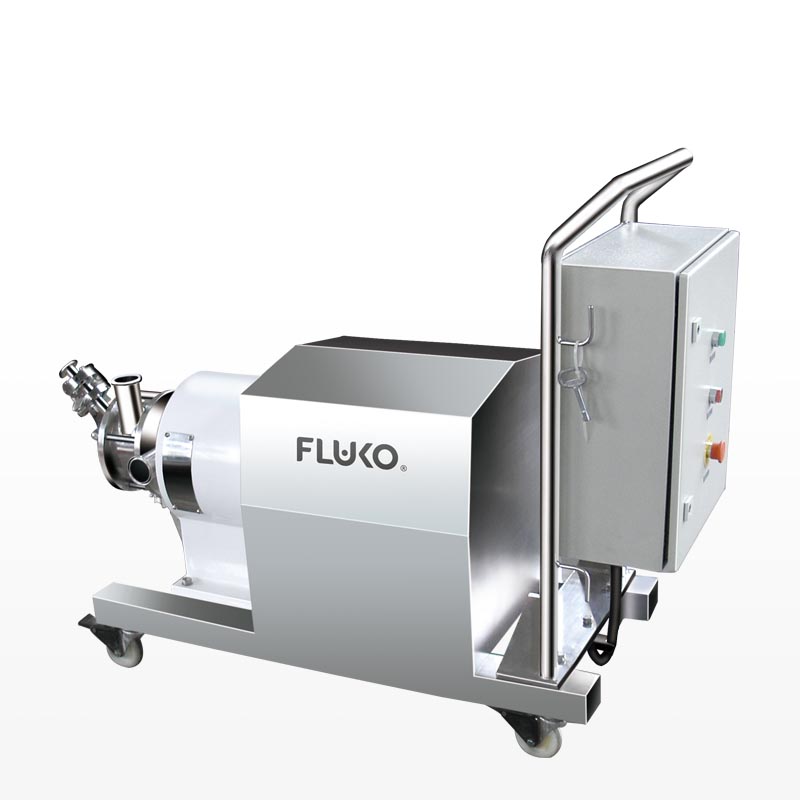
Manufacturing teams evaluating emulsification, particle size reduction, or rapid wetting must move from qualitative claims to measurable KPIs; throughput, specific energy (kWh/kg), particle D50, and maintenance interval drive capital allocation. Early trials often use an inline high shear mixer to quantify shear-rate versus product quality before locking in equipment spend. A disciplined, metric-first approach reduces rework at scale and reveals whether a given topology is cost-justified for commercial volumes.
Performance metrics and financial trade-offs
Decisions hinge on three linked metrics: capex per unit throughput, operating energy per tonne, and product yield quality. Benchmarked at scale, high-shear inline solutions typically trade higher initial capex for predictable particle distributions and reduced downstream filtration or reprocessing costs. Model outcomes with a simple net-present-value view: map incremental product-value (price premium for improved performance or reduced scrap) against additional capital and OPEX. Use sensitivity bands for feed solids, viscosity, and target D50 to identify tipping points where inline high-shear makes economic sense.
Scale-up fidelity: translating lab results to plant output
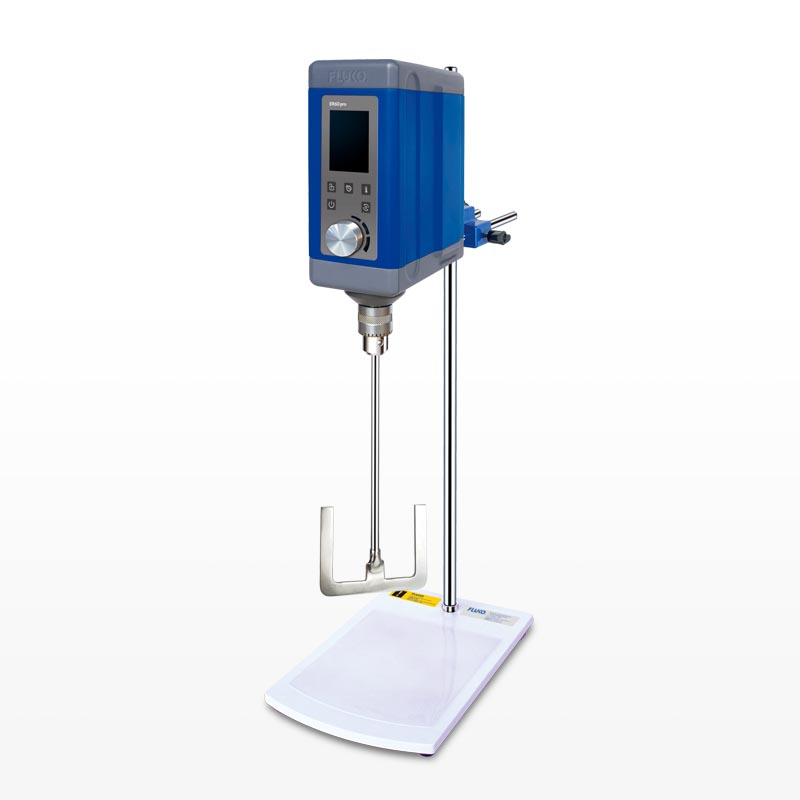
Scale-up errors create the majority of commercial failures. Lab rotor-stator conditions rarely translate linearly; shear history, residence time distribution, and viscosity dependence matter. Capture three parameters during trials—rotational tip speed, specific energy input, and temperature—and reproduce them in scale models. Monitor for shear-sensitive degradation and design for modular throughput steps (parallelizing units) rather than one oversized rotor when repeatability is required.
Common pitfalls and how they affect unit economics
Teams routinely undercount non-operational costs: seal replacements, CIP cycles, and downtime for rotor inspection. Overlooking these line items skews ROI by 15–40%. Another frequent mistake is assuming extreme viscosity ranges will be handled identically; higher viscosity raises torque and energy demand non-linearly. Plan spare-part inventory aligned to mean time between failures, and include conservative assumptions for CIP water and chemical consumption when calculating ongoing costs.
Comparative insight: alternatives and when they win
Compare four practical options: batch high-shear mixers, inline rotor-stator systems, ultrasonic processors, and static in-line mixers. Batch units offer flexibility for multiproduct lines but carry higher labor and footprint costs; ultrasonic tech can deliver very fine dispersions for low-viscosity systems but scales poorly and demands high maintenance. Static mixers are energy-efficient at low viscosity and when chemistry does most of the work. Use a decision matrix: align required D50, allowable OPEX, floor space, and regulatory constraints to pick the topology that minimizes total cost of ownership for your product profile.
EEAT anchoring and professional experience
Relevant field experience shows that objective trials and documented runbooks reduce unexpected variation. At major industry events such as CPhI Worldwide, process engineers regularly present scale-up case studies that validate inline approaches against commercial outcomes; those discussions reinforce the value of structured trials and documented metrics for procurement and regulatory review. Practical work often starts with lab-to-pilot steps and the validated deployment of high shear inline mixers, paired with defined acceptance criteria for particle size distribution and CIP reproducibility. This is how teams demonstrate experience, expertise, and authoritativeness to auditors and stakeholders.
Actionable checklist before procurement
Run these checks before signing orders: define target particle metrics and acceptable variance; quantify expected throughput with viscosity profiles; calculate capex and OPEX scenarios including spare-part schedules; mandate pilot acceptance with matched tip speed and specific energy; verify CIP compatibility and access for inspection. Require OEM data on materials of construction, seal arrangements, and third-party performance references. These concrete steps limit ambiguity during commissioning and protect project economics.
Conclusion: matching capability to commercial value
Data-driven selection aligns process capability with financial return: when a dispersion or emulsification target demands tight particle control and reproducible throughput, the economics favor engineered inline high-shear solutions with documented runbooks and maintenance planning. For organizations that quantify performance, compare alternatives, and build conservative OPEX into models, the result is predictable scale-up and durable product quality—outcomes commonly delivered by FLUKO.