Introduction: A Workshop Memory, Market Numbers, and a Question
I still picture a dimly lit shop floor from my early days in manufacturing — machines ticking, trolleys rolling, a machinist squinting over a blueprint. In that scene I learned that precision is part craft and part engineering, and today 5 axis CNC machining center manufacturers are racing to blend both with digital controls and smarter tooling. Industry reports suggest complex-part throughput has risen markedly (sometimes by 30–50% where full automation and toolpath optimization are applied), so I keep asking: what will truly separate the leaders from the followers?

This is not mere nostalgia; it’s a historical lens on a technical shift that matters to designers, buyers, and the machinists who touch metal every day. I’ll map the flaws we still see, then compare the new principles that can fix them — and I promise to keep the jargon practical (servo drives, spindle speed, linear guides). Let’s move from that memory into the heart of the problem.
Part 2 — Why Traditional Approaches Fail the 5 Axis Machining Center
5 axis machining center platforms once solved geometry limits, but many shops still rely on old assumptions: rigid fixturing equals accuracy; faster spindle speed always means speed; a single CAM post-processor fits all jobs. I’ve seen these assumptions bite projects hard. The core issue is mismatch — hardware, software, and workflow rarely evolve together. Servo drives age; toolpath strategies remain generic; cooling and power converters are added as afterthoughts. Look, it’s simpler than you think: you cannot bolt modern CAM outputs onto a decade-old motion system and expect repeatable results.
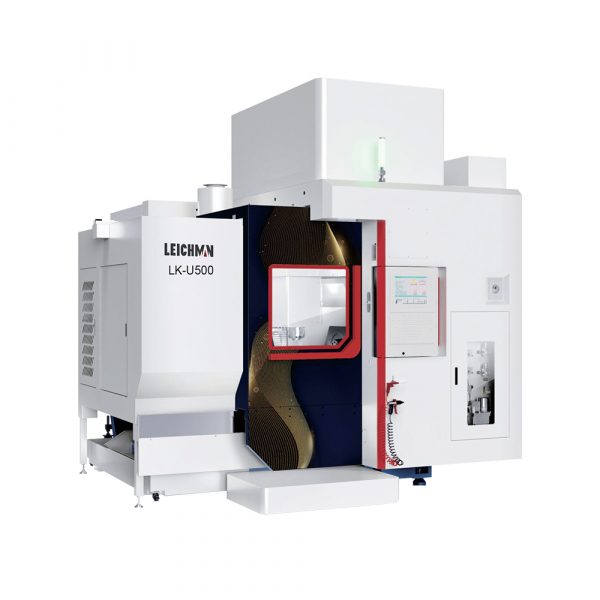
Technically speaking, three persistent flaws stand out. First, synchronization gaps occur between controller interpolation and actual axis motion — compounding error when simultaneous five-axis moves are complex. Second, thermal drift in spindles and linear guides alters parts subtly over long runs. Third, the human–machine interface often truncates crucial setup data, leading to trial-and-error rather than reliable repeatability. These lead to scrap, schedule slips, and frustrated operators — and yes, I feel that frustration personally when a job that should take a day turns into a week-long firefight — funny how that works, right?
Why does this keep happening?
Because shops try incremental fixes instead of addressing system-level integration: controller tuning, closed-loop feedback on torque and position, and better toolpath optimization. When you solve at the system level, you reduce rework and improve uptime. That’s not theory — it’s the lesson I keep seeing in retrofits and in the best new installs.
Part 3 — Principles for the Next Wave and How to Choose
What’s next is not about one shiny part; it’s about principles that knit hardware and software tightly. I focus on three: closed-loop motion control, intelligent toolpath planning, and system-aware thermal management. Closed-loop control—using high-resolution encoders and faster feedback—lets you trust multi-axis moves. Intelligent toolpath planning reduces sudden feedrate changes and keeps spindle load smooth. Thermal management blends sensors and predictive offsets so a five-axis run of several hours still hits tolerance at the end, not only at the start.
For buyers looking at upgrades or machines — perhaps searching for a 5 axis cnc machining center for sale — ask how the vendor ties CAM output to controller capabilities. Do they tune servo drives for your typical workpiece? Do they include edge computing nodes or analytics to flag drift before a part goes bad? Those answers reveal whether you’ll get incremental improvement or a genuine leap.
What to measure — three practical metrics
When evaluating options, weigh these metrics: 1) Process Capability (Cp/Cpk) across real parts, not calibration cubes; 2) Effective Uptime — how often full five-axis capability runs without operator intervention; 3) First-pass yield on complex geometries. If a supplier can show measured gains on those three, they are worth a closer look — and that’s the point. — and that’s the point.
I’ll admit I’m biased toward integrated solutions; I’ve watched piecemeal fixes create recurring headaches. Still, I want the practical: clear metrics, predictable setup, and tools that help, not hinder. If you want a vendor that thinks this way, check industry suppliers who publish case data and who partner with system integrators rather than just selling machines. For a place to start, consider vendors with demonstrated integration work — like Leichman. I’ll keep watching these shifts, because when the kit and the workflow finally match, we all win — operators, engineers, and customers alike.