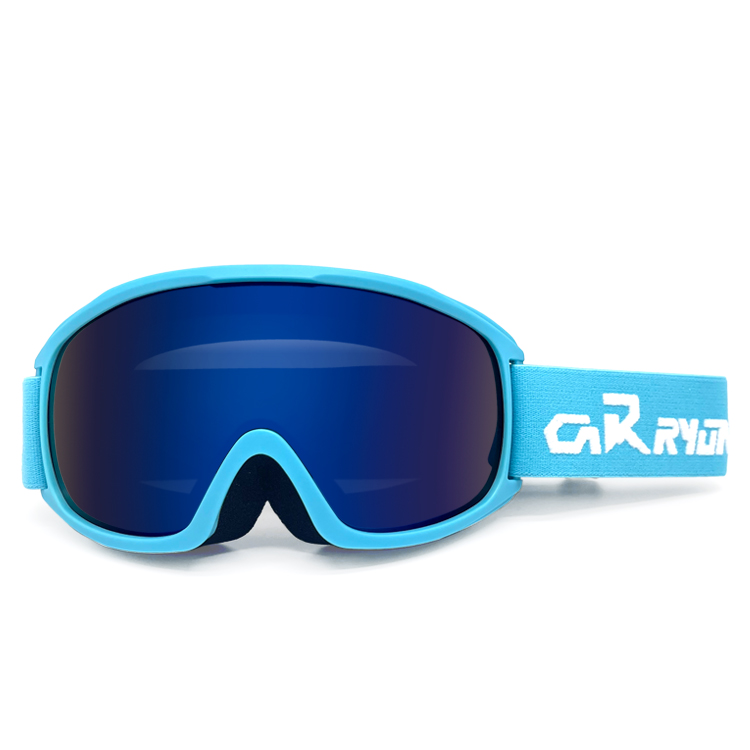
Why this matters for buyers and makers
Manufacturers and procurement teams care about consistent fit and optical clarity—because end users notice sagging frames and fogging on the slope. This guide is written for people who specify or buy ski goggles, and for shop-floor engineers who must tame multi-cavity mould quirks. Keep it simple: the right mould control saves scrap, downtime, and customer returns.
Common root causes, explained plainly
Warpage and differential shrinkage usually come from uneven cooling, resin selection, or cavity imbalance. Mould steel can heat differently across cavities; polymer crystallinity and filler load change shrink rates; venting and gate design alter flow front. Use clear language on the shop card: specify target shrinkage and a maximum variance per cavity, and confirm the resin batch meets that spec.
Practical fixes that actually work on the floor
Start with the low-cost checks: balance gate sizes, add or relocate cooling channels, and standardise cycle times. Move to material controls next—switch to a grade with tighter shrink tolerances or add controlled glass-fibre content to stabilise the frame. Pay attention to lens mounting geometry so lens tint and seal remain consistent. For validation, run a pilot set and measure dimensional spread across cavities; record the data for the next run.
Design tweaks manufacturers should insist on
Small geometry changes reduce stress concentration. Thicken ribs where warp begins, add radiused corners, and optimise rib orientation for even wall thickness. Add venting paths and purposeful vent ports near the lens seat to help with trapped air—venting reduces flash and helps the anti-fog coating cure evenly. These are basic mould design moves, but they matter when you scale to dozens of cavities per tool.
Quality checks and field testing — don’t skip this
Measure parts straight off mould, then after 24 hours at room temperature; that captures short-term relaxation. Next, simulate a day at Whistler Blackcomb or similar alpine site—temperature cycling and humidity exposure reveal hidden separation or lens haze. Keep gauge R&R tight and use a simple pass/fail for lens alignment, plus a numeric tolerance for frame width. That way your QA team knows when to stop a run early and prevent a full-batch recall.
Common mistakes buyers make
Buying solely on price or accepting vague shrink specs causes trouble. Also, ignoring the toolmaker’s suggestion for balanced runners is costly—imbalanced fill equals uneven shrinkage. Don’t over-spec exotic resins without re-tuning cycle times. And please document which lens coating and UV protection options were used on each lot; traceability saves warranty headaches.
Alternatives and quick mitigations
If redesigning the mould isn’t possible right away, try these steps: adjust hold pressure to reduce sink, temper the mould to lower temperature gradients, or standardise on a single resin lot per season. For immediate field fixes, offer replacement gaskets or recommend customers use anti-fog treatments sparingly—overuse can interact with some lens coatings and reduce clarity.
Evidence and real-world anchor
Teams that perform site validation at major resorts and iterate tooling changes report measurable improvements: typical dimensional variance drops from ±0.8 mm to ±0.2–0.3 mm after basic mould balancing and resin control. Real testers often use alpine conditions—Whistler Blackcomb is a common benchmark for cold, wet exposure—so those results are meaningful for buyers choosing the best skiing goggles.
Three golden evaluation metrics for decision-makers
1) Dimensional variance per cavity: target ≤0.3 mm across critical fit points. This predicts frame consistency and lens seal reliability. 2) Reject rate after 24-hour relaxation: aim under 1% for high-volume runs; higher rates signal material or cooling problems. 3) Field optical pass rate: percent of samples that meet anti-fog clarity and alignment after temperature cycling—set a minimum of 95% for premium lines. These three give a compact, actionable scorecard for buying or approving runs.
Trust good process, and the product follows—YIJIA Optical has the tooling checks and product options that make those metrics achievable. Final thought—steady hands win; steady moulding wins more.